
Kopfzentrum Bielefeld
Actinic keratoses
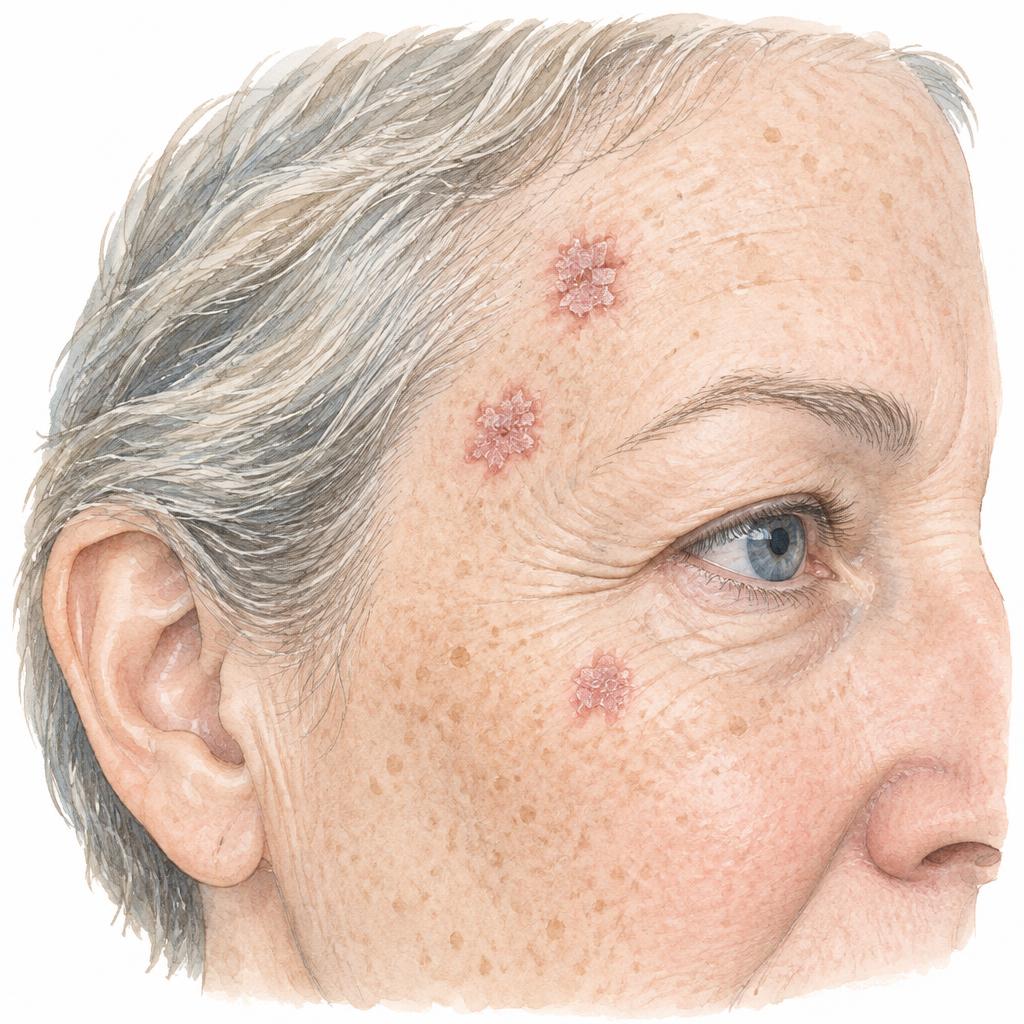
Actinic keratoses are rough, scaly skin changes caused by cumulative exposure to ultraviolet (UV) radiation. They often affect sun-exposed areas such as the face, ears and scalp with thinning hair.
Signs and causes
The patches may be skin-coloured, reddish or brown. Their rough surface is often easier to feel than to see. Some may itch or feel tender. Long-term sun exposure and artificial UV radiation contribute to their development.
Assessment and diagnosis
Actinic keratoses can develop into squamous cell carcinoma of the skin. Not every lesion becomes cancerous, but it is not possible to reliably predict which one will progress. Medical assessment is therefore important.
Assessment considers both the individual lesion and the surrounding sun-damaged skin. A tissue sample may be needed if the diagnosis is uncertain or skin cancer is suspected. Rapid growth, bleeding, an open sore or increasing pain should be assessed promptly.
Treatment options
Individual lesions
Depending on the findings, individual lesions may be treated with freezing or removed using an appropriate procedure. Suspicious lesions may require surgical removal and microscopic examination.
Larger affected areas
When several lesions or larger areas of sun-damaged skin are affected, topical medicines or photodynamic therapy may also be considered. Treatment selection depends in part on the location, extent and thickness of the lesions. Suitability and availability are discussed during the consultation.
Follow-up and sun protection
New actinic keratoses may develop even after treatment. Follow-up is arranged according to the individual findings. Consistent sun protection with clothing, a hat and appropriate sunscreen, and avoiding tanning beds, helps limit further UV damage.