
Kopfzentrum Bielefeld
Eyelid correction
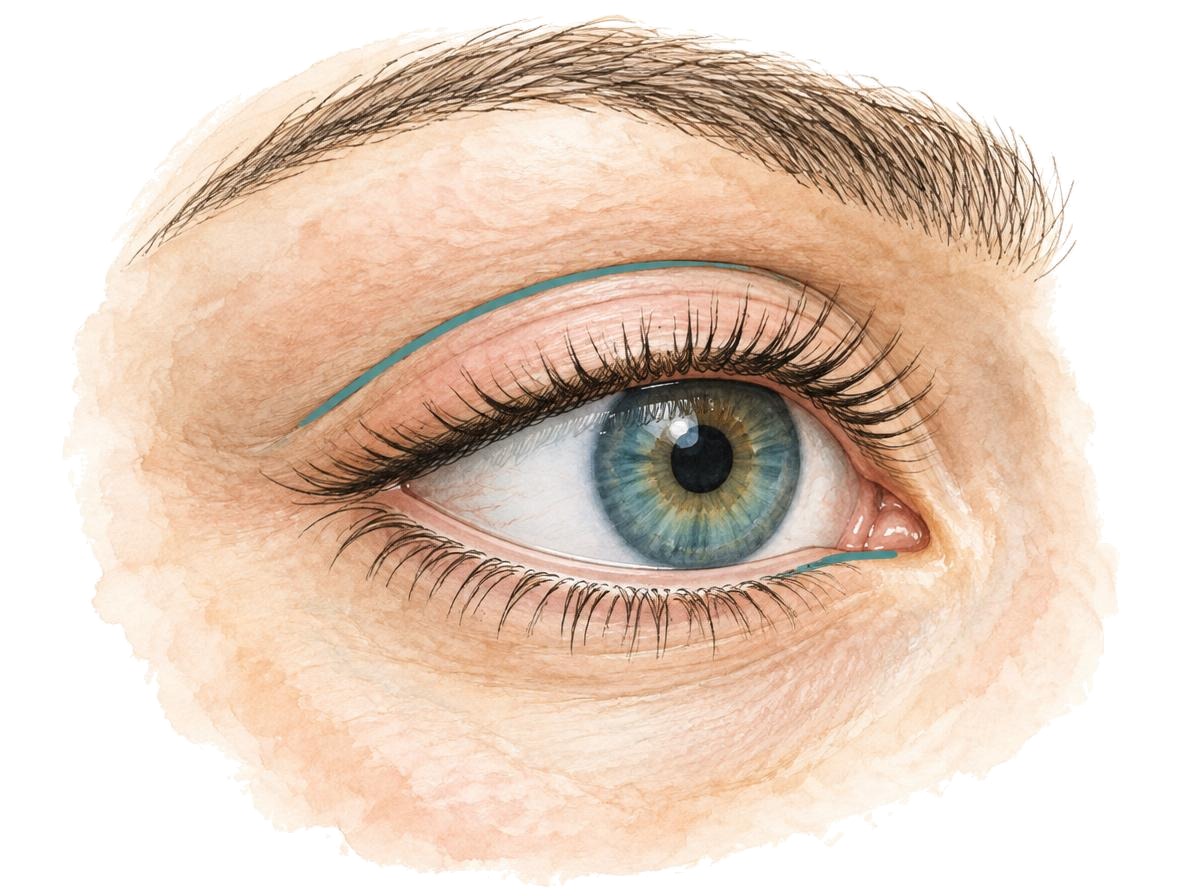
The area around the eyes plays a crucial role in human expression and is often the first area to show signs of ageing. Hooded eyelids and bags under the eyes can create a tired or stressed appearance. These changes are mainly due to the natural ageing process, genetic predisposition, stress and environmental factors. At a time when masks cover much of our faces, the eyes attract even greater attention.
Causes
Hooded eyelids: Caused by excess skin on the upper eyelid (blepharochalasis), which makes applying make-up difficult and creates a tired appearance. Reduced muscle tone can also contribute.
Bags under the eyes: Often characterised by deposits of fat and fluid under the eyes, which can become more pronounced with age and stress. Additional skin also develops around the lower eyelid and tear trough.
Diagnosis
Consultation and planning: The first step is a detailed consultation to discuss the options for eyelid lifting and determine the extent of the corrections required. A careful examination and photographic documentation are essential.
Treatment options
Eyelid lift (blepharoplasty): An eyelid lift can help by restoring a fresh, alert appearance. This procedure, which may involve both the upper and lower eyelids, is tailored to the individual patient's needs.
Surgical methods:
Upper eyelid lift: Fine incisions in the natural eyelid creases allow excess skin and fatty tissue to be removed.
Lower eyelid lift: Can be performed through an incision on the inside of the eyelid (transconjunctival blepharoplasty) to remove bags under the eyes without leaving visible scars.
Procedure
Surgery: The operation, which can be performed under local anaesthesia, sedation or general anaesthesia, usually takes 45–60 minutes. Cooling is recommended after surgery to minimise swelling.
Aim of treatment
An eyelid lift can improve not only aesthetic appearance but also self-confidence. However, the decision to undergo this procedure should be carefully considered and made in close consultation.
After the procedure
As with any surgical procedure, there are certain risks, which can, however, be minimised by choosing an experienced surgeon. Careful aftercare and following the recommended behaviour contribute to successful healing.
Other information
Cost coverage and financing: As this is predominantly an aesthetic procedure, statutory health insurance providers generally do not cover the costs. Coverage may be possible in exceptional cases where visual field restriction has been demonstrated.