
Kopfzentrum Bielefeld
Malignant changes in the head and neck region: laryngeal cancer
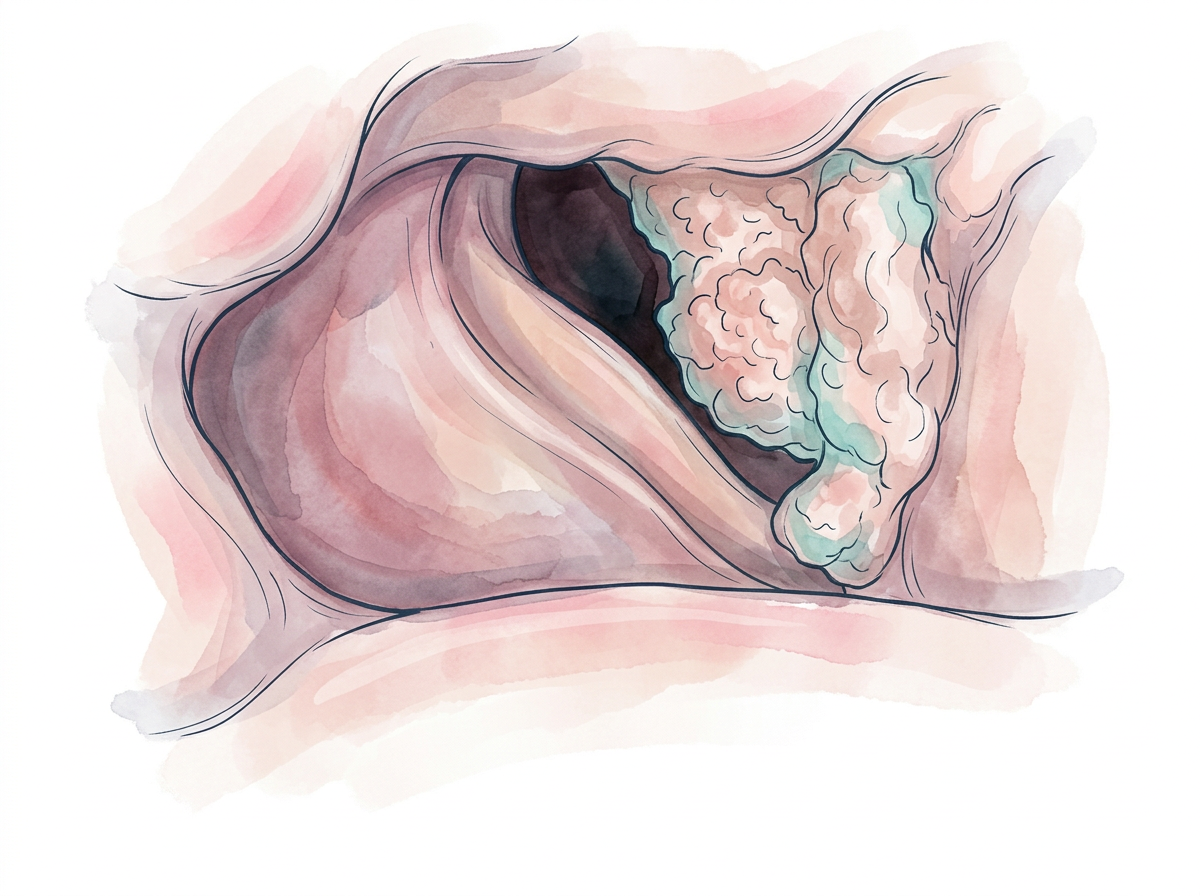
Diagnosis
The specialists at Kopfzentrum Bielefeld may already suspect a diagnosis during an initial examination and often recommend an endoscopic examination under anaesthesia (panendoscopy) with tissue sampling. This enables a precise assessment of the location and size of the tissue change in order to determine the optimal treatment recommendation.
Symptoms
Laryngeal cancer is a malignant tissue change that presents with symptoms such as hoarseness, difficulty swallowing or breathing difficulties.
Treatment options
Surgery:
Various techniques: Various surgical techniques are available to treat laryngeal cancer, depending on the location and size of the cancer.
Panendoscopy: Surgery often begins with a panendoscopy under general anaesthesia, during which the location and size of the tissue change are examined precisely.
Laser removal: Smaller laryngeal cancers confined to one vocal cord or the epiglottis can be removed through the mouth using a laser.
Partial removal of the larynx: If laser removal is not possible, partial removal of the larynx through an external approach may be considered. The aim is to preserve laryngeal function, including swallowing, speaking and breathing.
Complete removal of the larynx (laryngectomy): If partial removal with preservation of function is not possible, complete removal of the larynx is recommended. This results in a permanent opening of the windpipe in the neck and loss of voice.
Neck dissection: If lymph node metastases are present, the lymph nodes in the neck are removed (neck dissection) at the same time as the tumour, taking care to preserve nerves and blood vessels.
Alternatives to surgery: In some cases, radiotherapy with or without chemotherapy may be considered as alternatives to surgery.
After the procedure
Monitoring: After extensive laryngeal surgery, monitoring using a monitor is often necessary, with an inpatient stay of one or more days.
Nutrition: In some cases, eating and drinking are avoided for a few days, and nutrition is provided through a gastric tube.
Swallowing training: If there are problems with swallowing, swallowing training is provided with the help of the speech and language therapy team.
Tracheostomy: If a tracheostomy was performed as part of the operation, a prompt assessment is made as to whether it can be closed again.
Voice rehabilitation: After complete removal of the larynx, it is possible to learn to use a substitute voice, and various methods such as voice prostheses or speech and language therapy are offered.
Psycho-oncological support: Kopfzentrum Bielefeld offers psycho-oncological support and is in contact with the self-help group for people who have undergone laryngeal surgery in Bielefeld.
Multidisciplinary tumour board: All patients with laryngeal cancer are discussed at the multidisciplinary tumour board to determine the best possible treatment recommendation.
Cancer follow-up: Regular cancer follow-up appointments at the outpatient clinic are planned, including examinations, ultrasound, computed tomography and endoscopic checks.