
Kopfzentrum Bielefeld
Cochlear implant
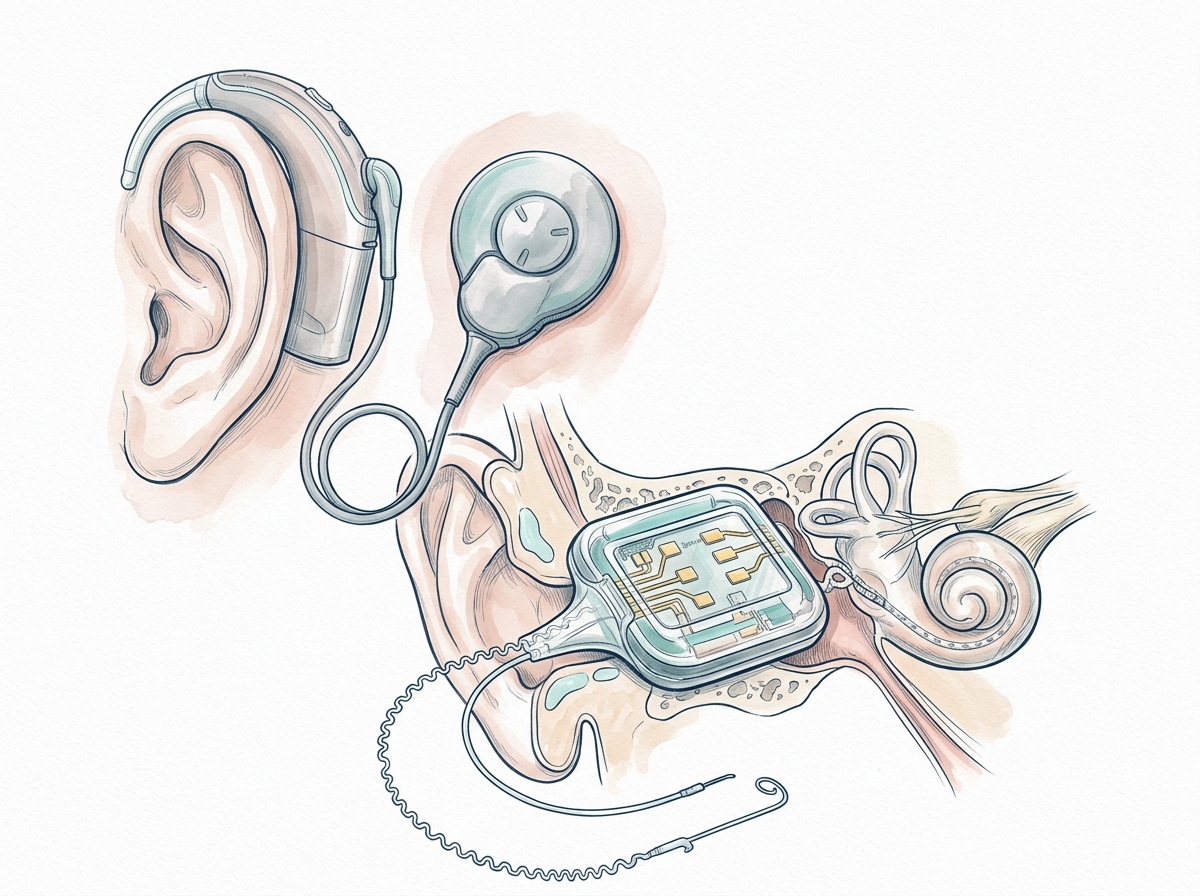
The cochlear implant (CI) is a successful replacement for the inner ear sensory organ and is used for severe hearing loss or deafness, whether on one side or both sides. By converting acoustic sound into electrical impulses, it enables the perception of sound. Experience shows that a CI significantly improves speech understanding and often even makes telephone conversations possible again.
Reasons for treatment
Cochlear implant:
Severe or near-total hearing loss
Deafness in one or both ears
The prospects of success are assessed individually through a consultation, hearing investigations and balance tests
In principle, CI surgery is possible at almost any age, provided the patient's health permits it
Hearing loss can no longer be adequately managed with hearing aids
A functioning auditory nerve and a fluid-filled inner ear are present, as established beforehand by CT and MRI
Treatment options
Surgery: CI implantation is performed under general anaesthesia. A skin incision behind the ear provides access to the cochlea. An operating microscope is used to visualise the small structures of the middle and inner ear. The CI electrode wire is inserted into the cochlea through a small window. Initial electroacoustic stimulation is performed. If the CI works, the magnetic coil, to which the speech processor will later attach, is placed in a skin pocket behind the ear, and the wound is closed. The entire operation takes about 1 hour.
After the procedure
Initial fitting of the cochlear implant and outpatient rehabilitation: after a healing period of about four weeks, the initial fitting takes place, when the implant is switched on. In subsequent sessions, the speech processor settings are checked, acclimatisation to loudness takes place, audiological checks are performed, and regular hearing and speech training is offered. Close support from doctors and therapists is ensured.