
Kopfzentrum Bielefeld
Tonsil removal (tonsillectomy) and tonsil reduction (tonsillotomy)
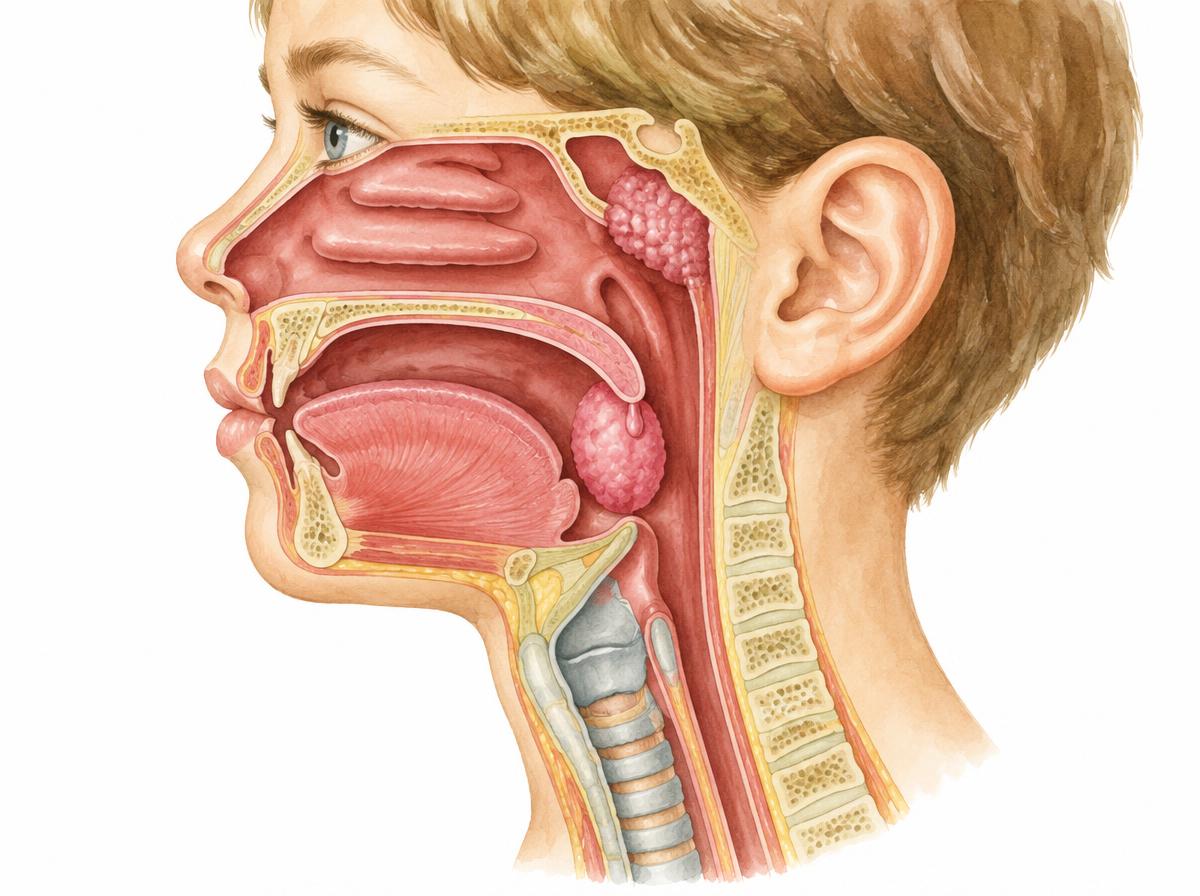
Reasons for treatment
Enlarged tonsils in children: Can impair eating and breathing at night.
Snoring with pauses in breathing: Particularly with severely enlarged tonsils.
Recurrent tonsillitis: May require surgical removal.
Tonsillar abscess: A collection of pus that does not respond adequately to antibiotics.
Independent medical second opinion: The right to obtain a second opinion to review the need for surgery.
Treatment options
Surgery:
Partial removal (tonsillotomy): Suitable for excessively large tonsils where inflammation is not the main problem. Removal of the excess portion using a laser, high-frequency or radiofrequency device. Little pain, low risk of bleeding.
Complete removal (tonsillectomy): Removal of the tonsils together with their capsule. General anaesthesia, usually painful after the procedure, requires painkillers. Risk of postoperative bleeding, therefore performed as an inpatient procedure.
After the procedure
Physical rest: Recommended for two to three weeks after the procedure.
Disappearance of the white coatings: Similar to scabs on a skin wound in the area where the tonsils were.
Risk of postoperative bleeding: Particular attention in the first weeks after surgery.
Follow-up examination: An ENT specialist should be consulted to assess healing.