
Kopfzentrum Bielefeld
Paranasal sinus cancer
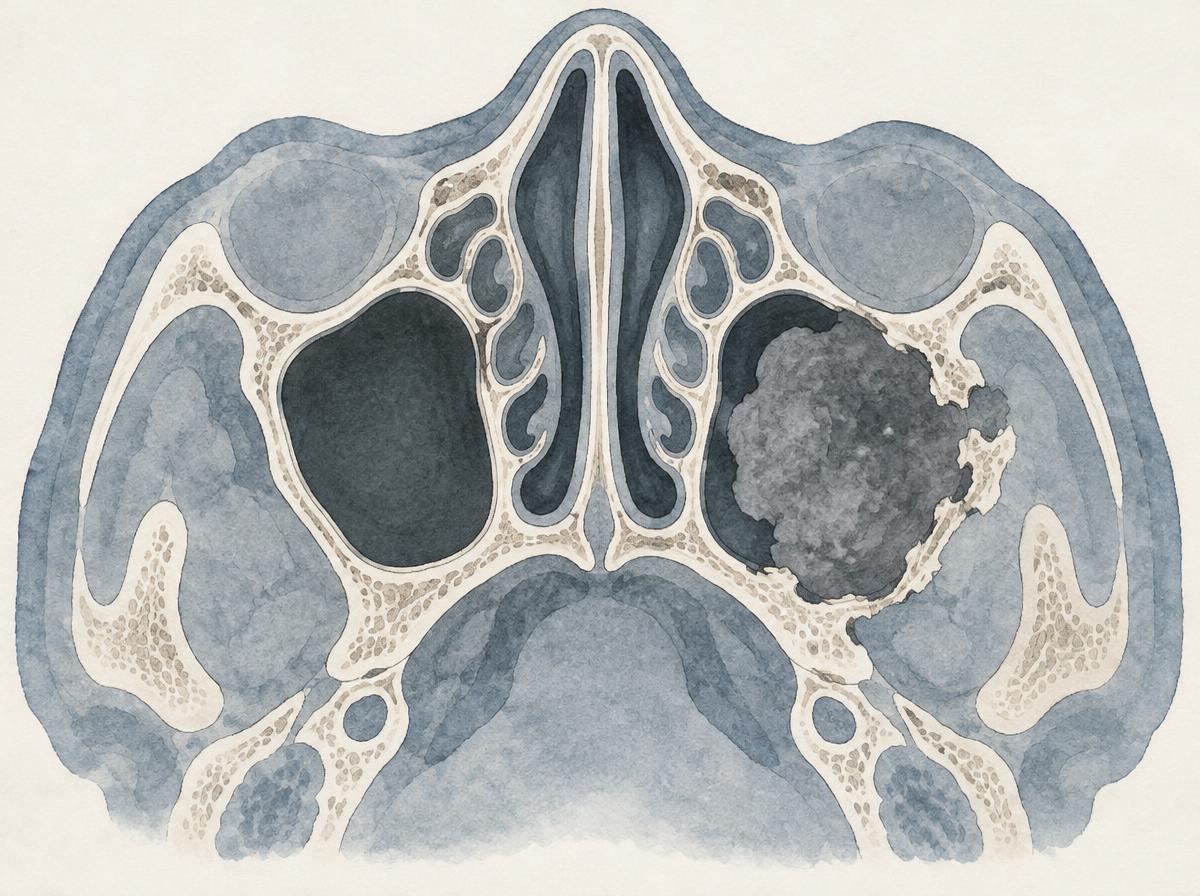
Diagnosis
One-sided complaints such as a blocked nose, nosebleeds or a feeling of pressure in the face can point to a change in the paranasal sinuses. Assessment includes nasal endoscopy, imaging (computed tomography and magnetic resonance imaging) and taking a tissue sample.
Symptoms
Paranasal sinus cancer is a rare malignant tissue change. Possible signs include one-sided nasal obstruction, nosebleeds, a reduced sense of smell, pain or a feeling of pressure in the face, swelling of the cheek or upper jaw, visual disturbances or dental complaints without a dental cause.
Causes and risk factors
Risk factors include occupational exposure to wood and leather dust, certain chemical substances, smoking and long-standing inflammation of the paranasal sinuses.
Treatment options
Surgery:
Treatment is planned individually. Depending on the type, location and extent of the tissue change, options include surgical removal – frequently endoscopic and image-guided – as well as radiotherapy and/or chemotherapy. For extensive findings, reconstruction with the body’s own tissue may be necessary.
Aim of treatment
Complete removal of the tissue change with the best possible preservation of breathing, vision, speech and swallowing, as well as regular follow-up examinations to detect a recurrence early.