
Kopfzentrum Bielefeld
Rhinoplasty: correction of the external shape of the nose
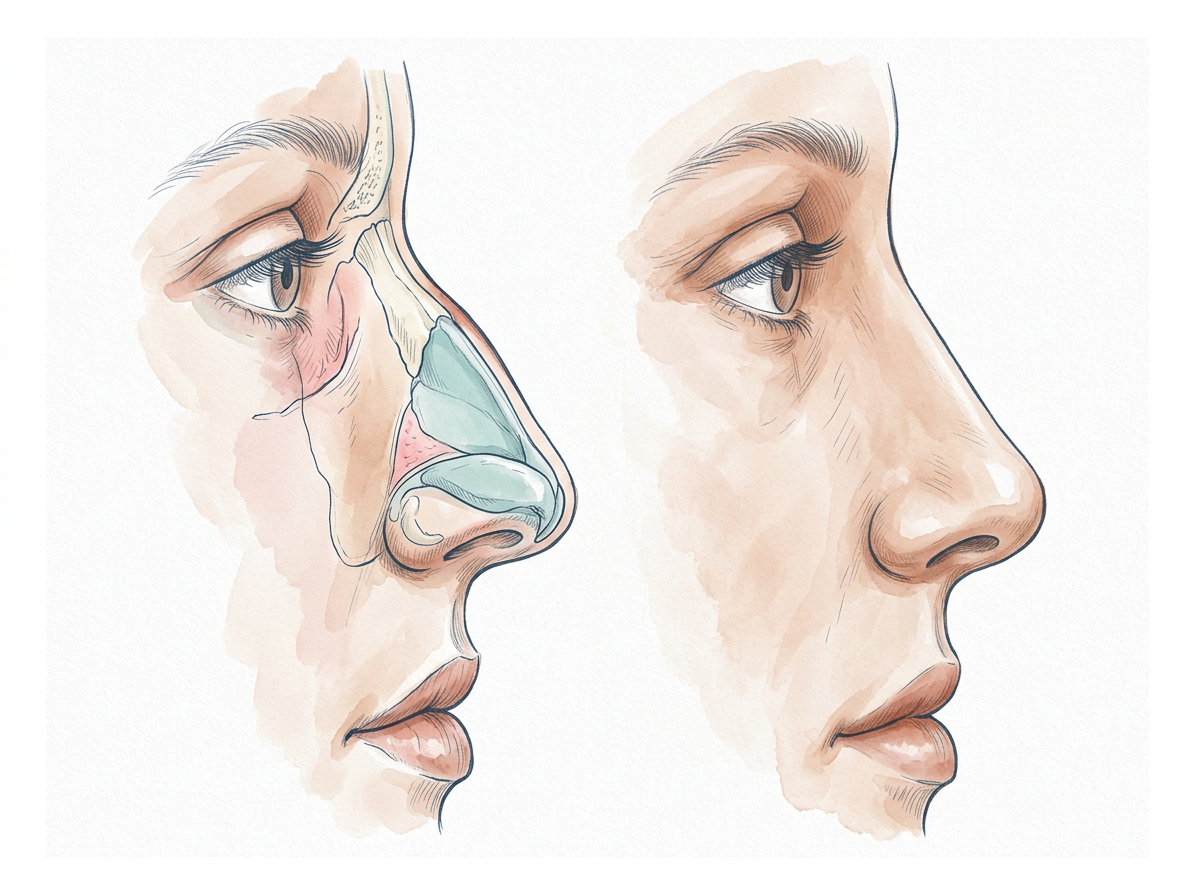
Rhinoplasty, also known as nose reshaping, is a highly specialised surgical procedure used both to improve the aesthetic appearance of the nose and to correct functional problems. As a central element of the face, the nose contributes significantly to the harmony of facial features while also fulfilling critical
Reasons for treatment
Reasons for rhinoplasty range from congenital or injury-related changes in shape to functional impairments. Typical aesthetic concerns include correction of a crooked nose, a humped nose, a saddle nose and other unwanted nasal shapes. At the same time, surgery can address breathing problems caused by structural changes such as a deviated nasal septum.
Diagnosis
A thorough consultation takes place before surgery to understand the patient's wishes precisely and provide a realistic assessment of achievable results. The aim is a natural-looking result that is aesthetically pleasing and fits harmoniously into the face, while improving or preserving nasal function.
Treatment options
Surgical techniques: Depending on individual needs, rhinoplasty can be performed either through an internal approach (closed rhinoplasty) or through an external incision across the columella (open rhinoplasty). The open method gives the surgeon a direct view, allowing more precise adjustment of the nasal structures.
Where additional material is needed to strengthen or restore the nasal structure, cartilage can be taken from the patient's outer ear or rib. These techniques require a high level of specialist knowledge and experience.
Surgery: Rhinoplasty is usually performed under general anaesthesia and generally requires a short stay. Special splints or dressings are applied to support the new nasal shape and protect the nose during healing.
Aim of treatment
Rhinoplasty offers an effective way to address both aesthetic and functional problems of the nose. With careful planning and performance by experienced specialists, patients can expect significant improvements in their appearance and quality of life. It is important to have realistic expectations and follow the treating team's instructions for successful healing.
After the procedure
Aftercare plays an essential role in the success of rhinoplasty. Regular follow-up appointments and careful nasal care are crucial to ensure optimal results and prevent complications. Complete healing and the final appearance of the nose may take several months.