Kopfzentrum Bielefeld
Sleep apnoea and snoring treatment
Snoring and obstructive sleep apnoea are not the same condition. The appropriate treatment depends on the findings and on where the upper airway narrows during sleep.
Symptoms and assessment
Snoring can disrupt sleep. Repeated pauses in breathing during sleep may indicate sleep apnoea. Possible effects include daytime tiredness, microsleeps and difficulty concentrating. Untreated obstructive sleep apnoea can increase the risk of cardiovascular disease.
A sleep assessment determines whether sleep apnoea is present. Evaluation of the airway then helps guide the choice of an appropriate treatment.
Palatal arch surgery
Aim of the procedure
In selected cases, procedures involving the soft palate and palatal arches may be considered. Reshaping, repositioning or stabilising tissue aims to reduce narrowing in the throat. The appropriate technique depends on the individual anatomy.
Individual selection
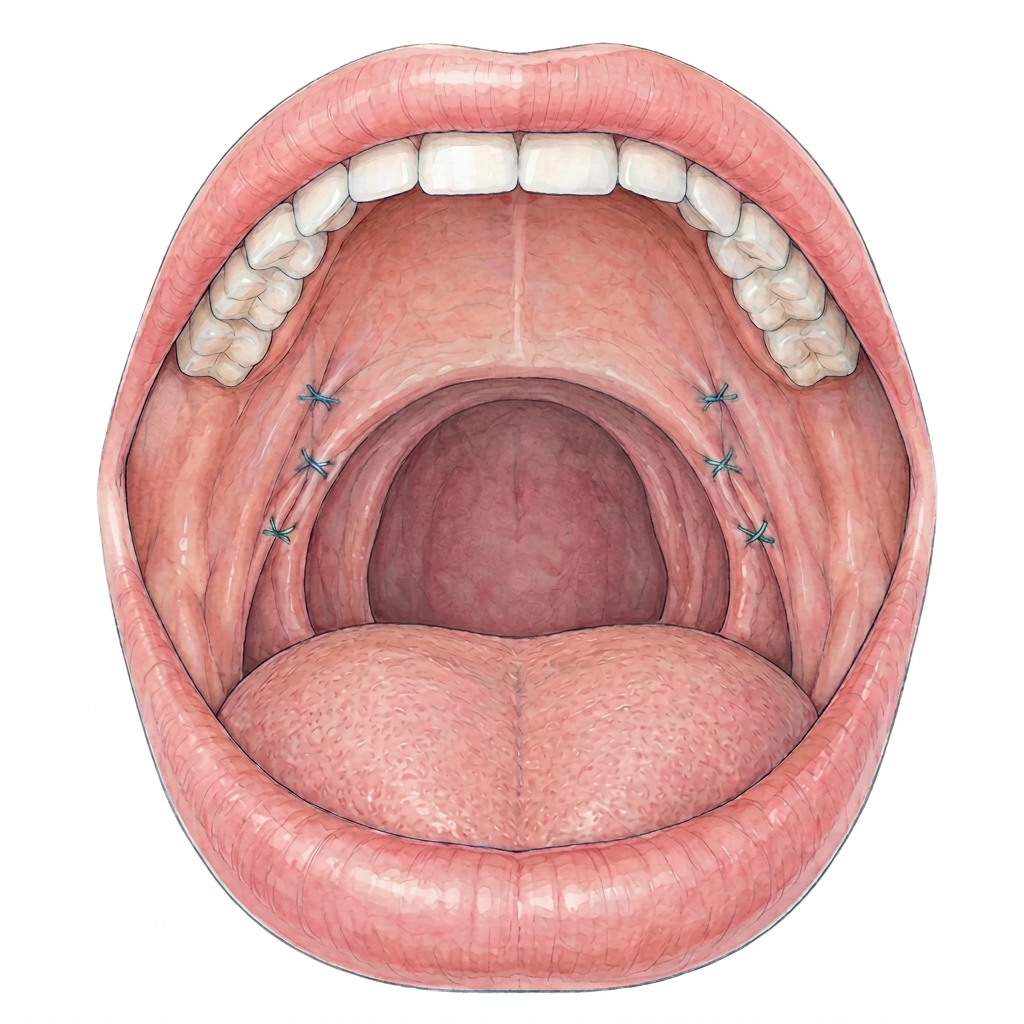
Palatal arch surgery is not appropriate for every form of snoring or sleep apnoea. The illustration schematically shows a possible appearance after uvulopalatopharyngoplasty (UPPP). The precise result depends on the surgical technique and individual anatomy.
Other treatment options
Jaw advancement
Surgical jaw advancement, described on the clinic’s previous website, is a different procedure from palatal arch surgery. The upper and lower jaws are repositioned to enlarge the upper airway. This complex procedure requires individual, multidisciplinary planning.
Hypoglossal nerve stimulator
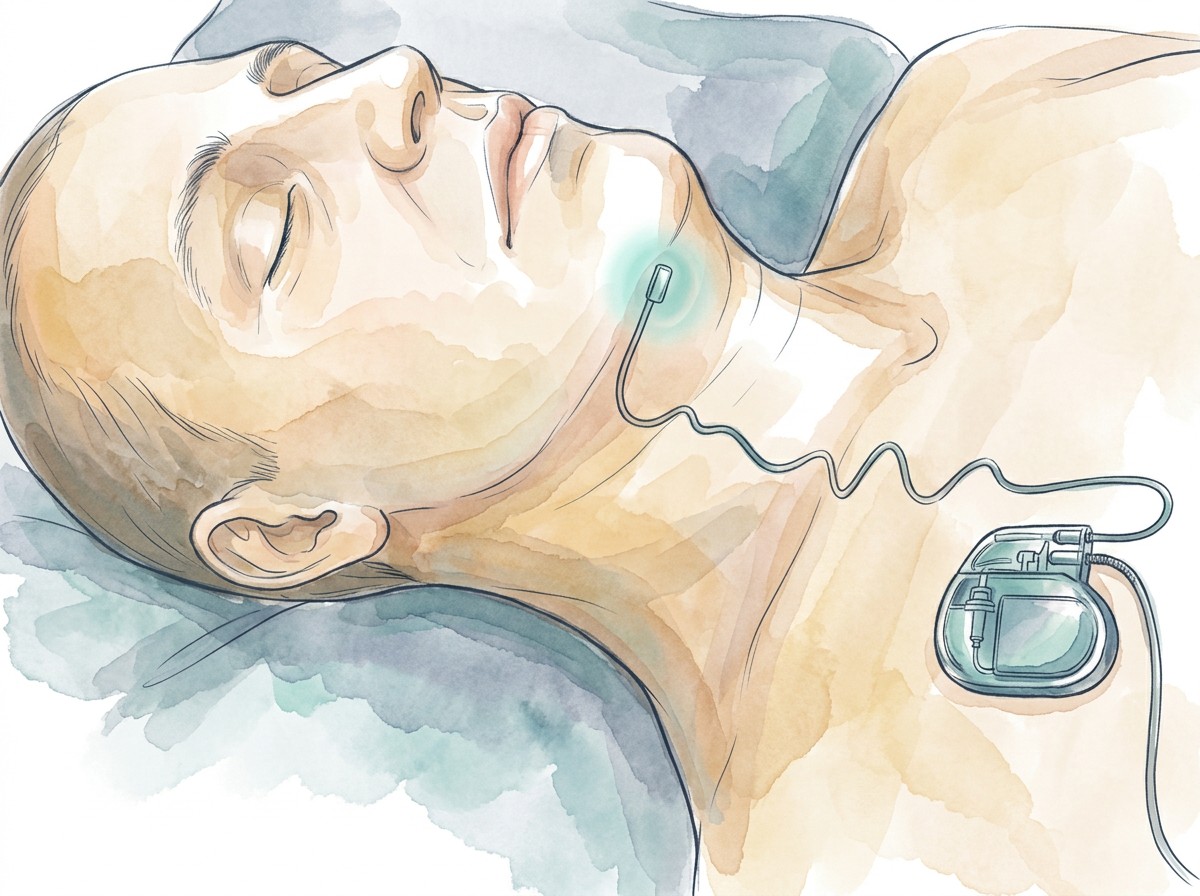
Occasionally, a hypoglossal nerve stimulator may be considered for obstructive sleep apnoea. An impulse generator is implanted beneath the skin below the collarbone and connected via a lead to the hypoglossal nerve. During sleep, the system stimulates the nerve so that the tongue muscles keep the airway open. The device is switched on and off by the patient using a remote control.
Whether such therapy is suitable depends on the findings, the cause of the narrowing and individual circumstances. Suitability is assessed as part of the sleep evaluation.
Non-surgical treatment
Depending on the findings, positive airway pressure treatment using a CPAP mask or an appropriate mandibular advancement device may also be considered. Whether surgery is suitable and how it fits into treatment is discussed after assessment.