Kopfzentrum Bielefeld
Sleep medicine
Sleep medicine at Kopfzentrum Bielefeld offers interdisciplinary collaboration and tailored treatment options through the expertise of various specialties.
Diagnosis
Daytime tiredness, a feeling of insufficient sleep and episodes of microsleep as signs. Obstructive sleep apnoea (OSA) presents with loud snoring and pauses in breathing. Polysomnography helps as an initial diagnostic method using a home sleep-monitoring device.
Treatment options
Breathing therapy with CPAP and APAP
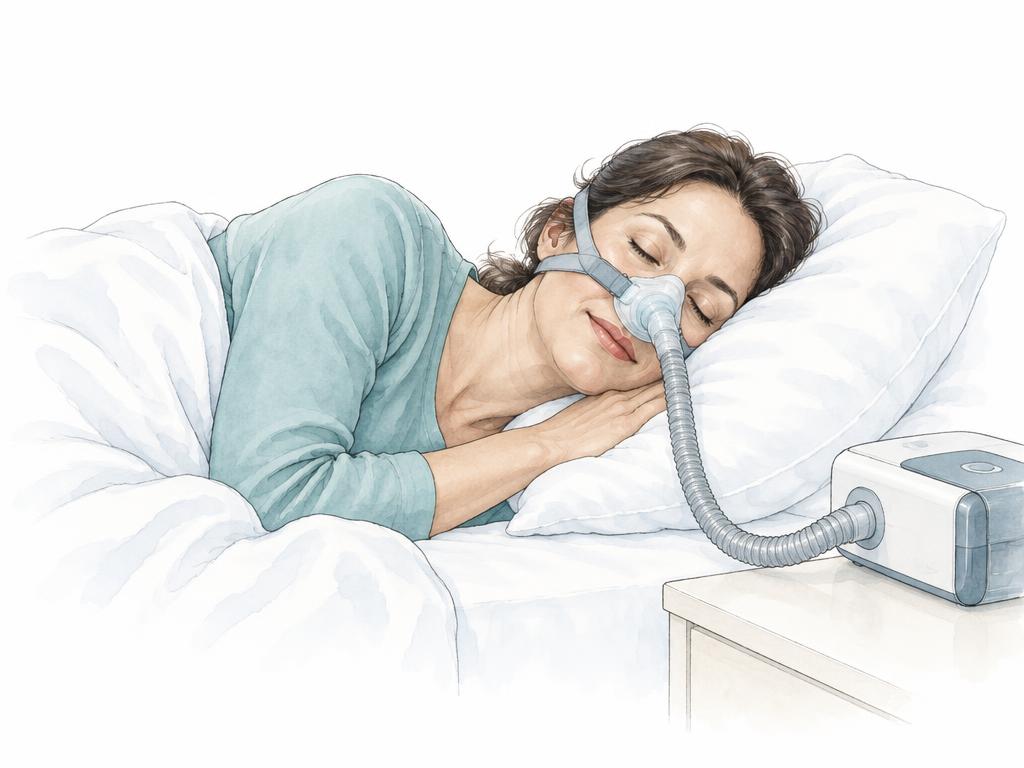
NPAP therapy (CPAP and APAP) is the optimal method for successfully treating sleep apnoea in the vast majority of cases. A positive-pressure breathing device and mask are used at night. Alternative methods depend on individual needs.
Further investigations
Investigations and surgical treatment options: endoscopic examination of the airways and instrument-based tests. Drug-induced sleep video endoscopy (MISE) to simulate airway behaviour during sleep.
Surgical treatment options
Nasal septum
Surgical treatments depending on the diagnosis: correction of the nasal septum to improve nasal breathing.
Soft palate and throat (UVPP)
Uvulovelopharyngoplasty (UVPP) involves tightening the structures of the uvula, soft palate (velum) and throat (pharynx). The aim is to reduce snoring noise if it is caused by vibrations of these structures. The complete operation includes removal of the palatine tonsils (tonsillectomy), removal of strips of mucous membrane followed by suturing of the palatal arches to create a stable plate of scar tissue here, and removal of excess mucous membrane from the uvula.
Tongue pacemaker
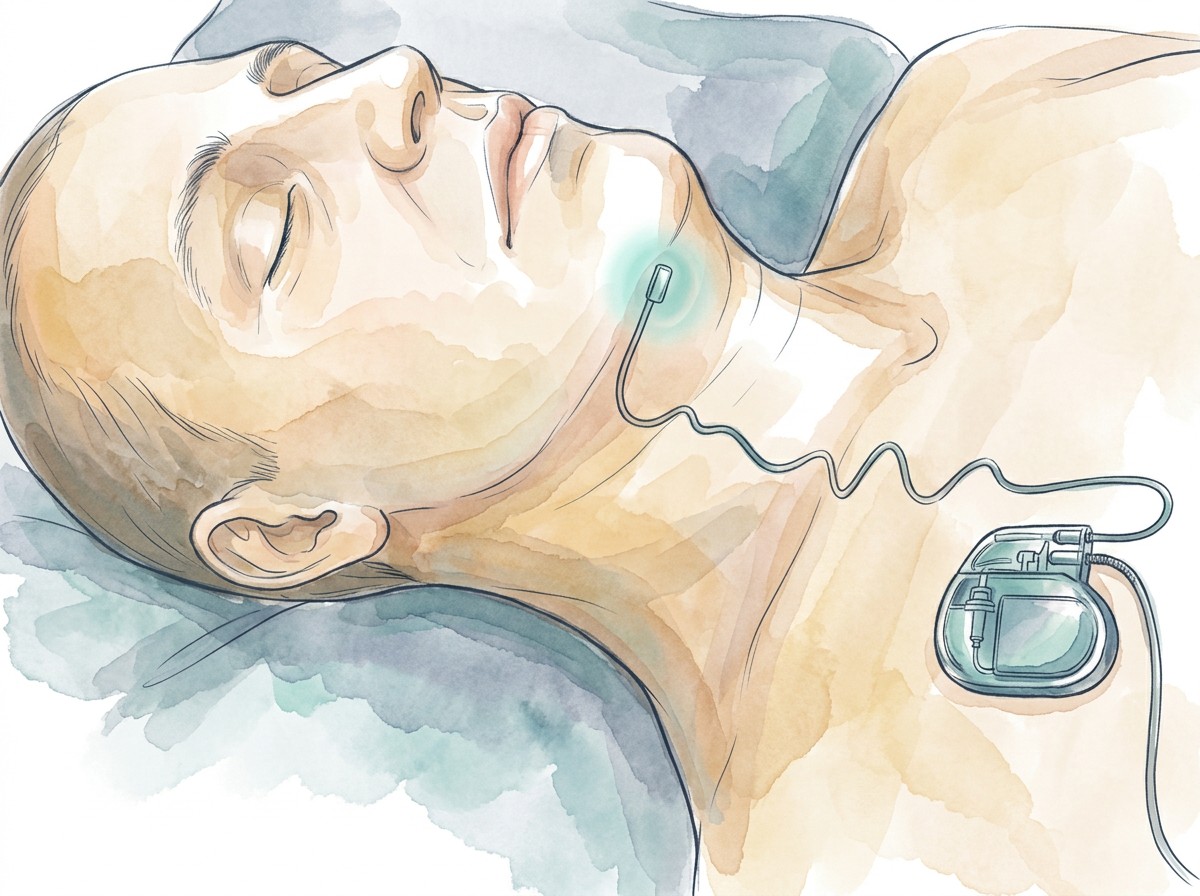
Selective hypoglossal nerve stimulation using a tongue pacemaker. A small pulse generator is placed under the skin below the collarbone. A thin lead connects it with the hypoglossal nerve, which controls the tongue muscles, while a second lead senses breathing movements. With each breath the system delivers a short pulse – the base of the tongue moves forwards and the throat opens.
Who it suits: The procedure may be an option for adults with moderate to severe obstructive sleep apnoea when CPAP or BPAP therapy is insufficient or not tolerated. Before implantation we check with sleep endoscopy (DISE) whether the throat collapses all the way around – if it does, the procedure is not suitable. Body weight is also taken into account: the available study data cover patients up to a body mass index of 40.
Procedure: The implant is placed under general anaesthesia, usually with a short inpatient stay. The system is not switched on straight away: initial activation and basic settings take place after the healing phase, generally after about four weeks. Over the following months the stimulation intensity is fine-tuned at a follow-up that includes an overnight sleep study, and is adjusted again later if needed.
Everyday use: Before falling asleep the patient switches the system on with a handheld remote, and off again on waking. The settings can be adjusted at any time. In large registry studies around two thirds of those treated achieve a good result. Serious complications are rare – they occurred in about one per cent in published analyses; the most frequent report is a pulling sensation or mild discomfort from the pulses.
Whether a tongue pacemaker is an option for you is clarified in an individual assessment.
Advancement of the upper and lower jaws
Bimaxillary rotational advancement for jaw misalignment: treatment addressing the cause of obstructive sleep apnoea. Moving the upper and lower jaws forwards creates more space in the throat. Positive effects on pauses in breathing at night and external appearance. Affects chin position, nose shape, smile line and tooth display. Digital planning of the operation for optimal function and aesthetics. Various surgical techniques, such as genioplasty, to balance the aesthetic effects.