
Kopfzentrum Bielefeld
Screening for head and neck cancer
Symptoms
There is currently no established screening method for the early detection of head and neck cancer. Diagnosing these cancers is often difficult and requires complex procedures. In most cases, laryngeal and hypopharyngeal carcinomas are diagnosed because symptoms occur, such as hoarseness or changes in the voice.
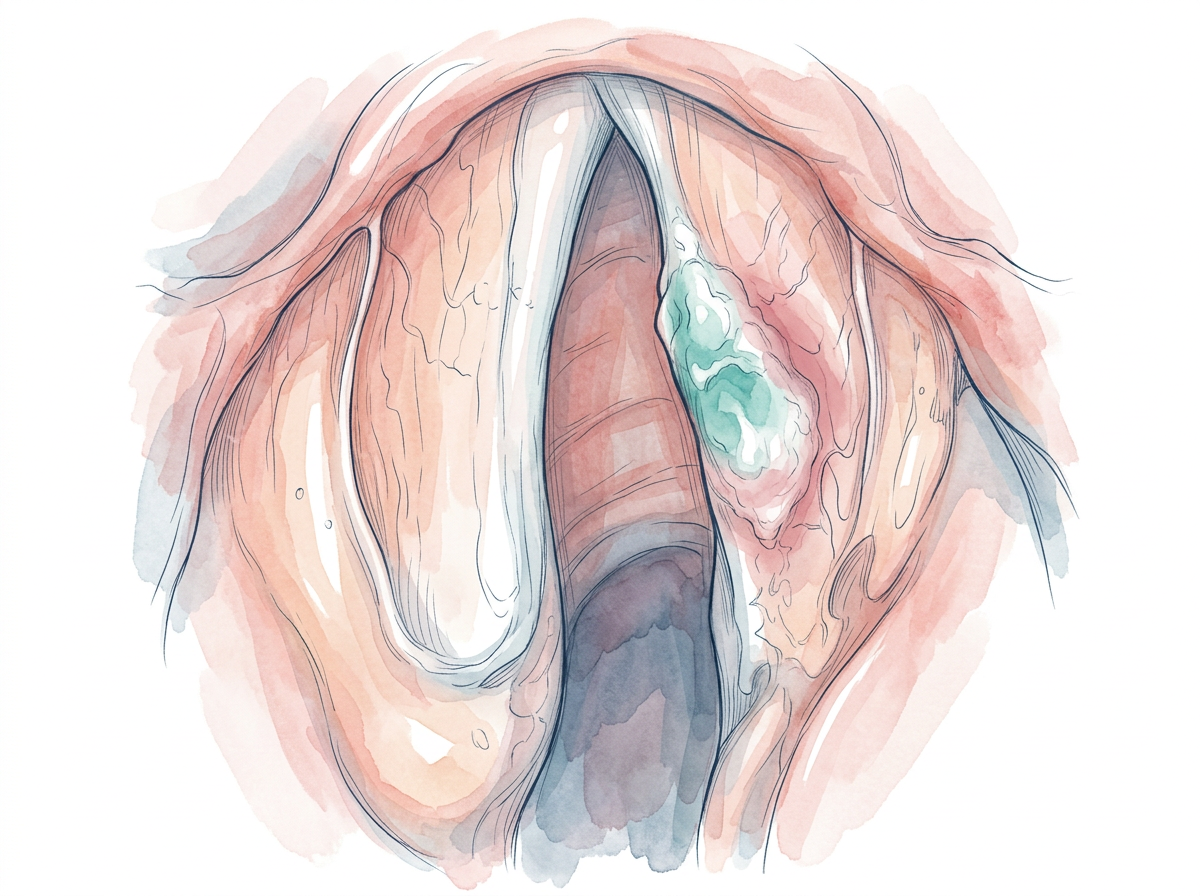
Laryngeal cancer that develops on the vocal cords (glottis) can be detected early through hoarseness or changes in the voice. People who notice voice changes, particularly hoarseness, within two weeks should see a doctor immediately.
For cancers that begin outside the vocal cords, hoarseness only appears at advanced stages or when the cancer has spread to the vocal cords. Other symptoms that may indicate head and neck cancer include a persistent sore throat, constant coughing, pain on swallowing, difficulty swallowing, earache, breathing difficulties, weight loss and the presence of a lump or mass in the neck.
It is important to emphasise that many of these symptoms can also be caused by other conditions. Nevertheless, a doctor should be consulted if these signs and symptoms are present, to determine the exact cause and initiate appropriate treatment.
Diagnosis
Medical history and physical examination: The doctor gathers information about symptoms, risk factors, family medical history and other medical conditions. A thorough physical examination focuses on the head and neck to identify signs of cancer or other conditions.
Panendoscopy: A combination of laryngoscopy, oesophagoscopy and sometimes bronchoscopy. Enables a comprehensive examination of the larynx and hypopharynx as well as the oesophagus and windpipe.
Laboratory tests: Examination of blood, urine or other substances to check general health. These are not diagnostic tests for laryngeal or hypopharyngeal cancer, but they can assess the patient’s general condition for further treatment.
Imaging techniques: A chest X-ray, CT or CAT scan, magnetic resonance imaging (MRI) and positron emission tomography (PET) may be performed to assess the spread of the cancer.
Biopsy: Taking a tissue sample is the most reliable way to diagnose cancer. An endoscopic biopsy or fine-needle aspiration biopsy (FNA) may be performed.
It is important to see a doctor early to obtain an accurate diagnosis and the best possible treatment.