
Kopfzentrum Bielefeld
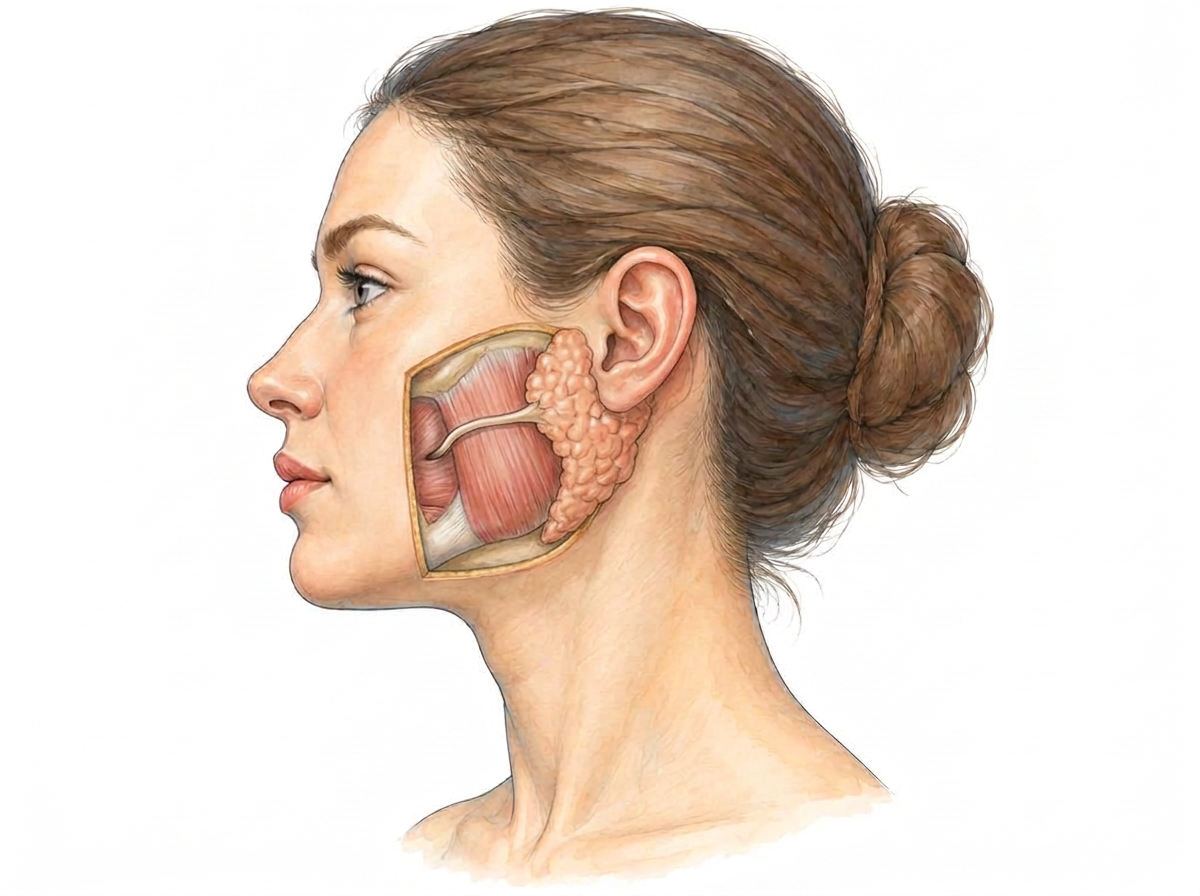
Parotid gland (glandula parotis)
Salivary stones and benign or malignant changes in the parotid gland may require treatment. Examination helps establish the diagnosis and the appropriate therapy.
Diagnosis
The initial assessment uses ultrasound. CT or MRI may be added if required.
When is treatment needed?
Surgery may be considered for salivary stones that cannot be removed endoscopically. Tumours are generally removed surgically, particularly if malignancy is suspected.
Surgery and facial nerve protection
The procedure
The procedure is usually performed under general anaesthesia. An incision in front of the ear provides access to the parotid gland. Outpatient treatment may be possible.
Facial nerve monitoring
The facial nerve is monitored continuously during surgery. This nerve monitoring is used to reduce the risk of facial nerve paralysis.
For malignant tumours, removal of part of the nerve may be necessary. In this case, nerve reconstruction surgery may be required.
After the procedure
Discharge and drainage
Discharge may be possible later on the day of surgery. If a drainage tube is placed, it may be removed after two days.
Tissue examination and follow-up
The removed tissue is examined histopathologically. The results are discussed and the wound checked after a few days at the outpatient clinic of Kopfzentrum Bielefeld.