
Kopfzentrum Bielefeld
Eustachian tube dysfunction: open tube
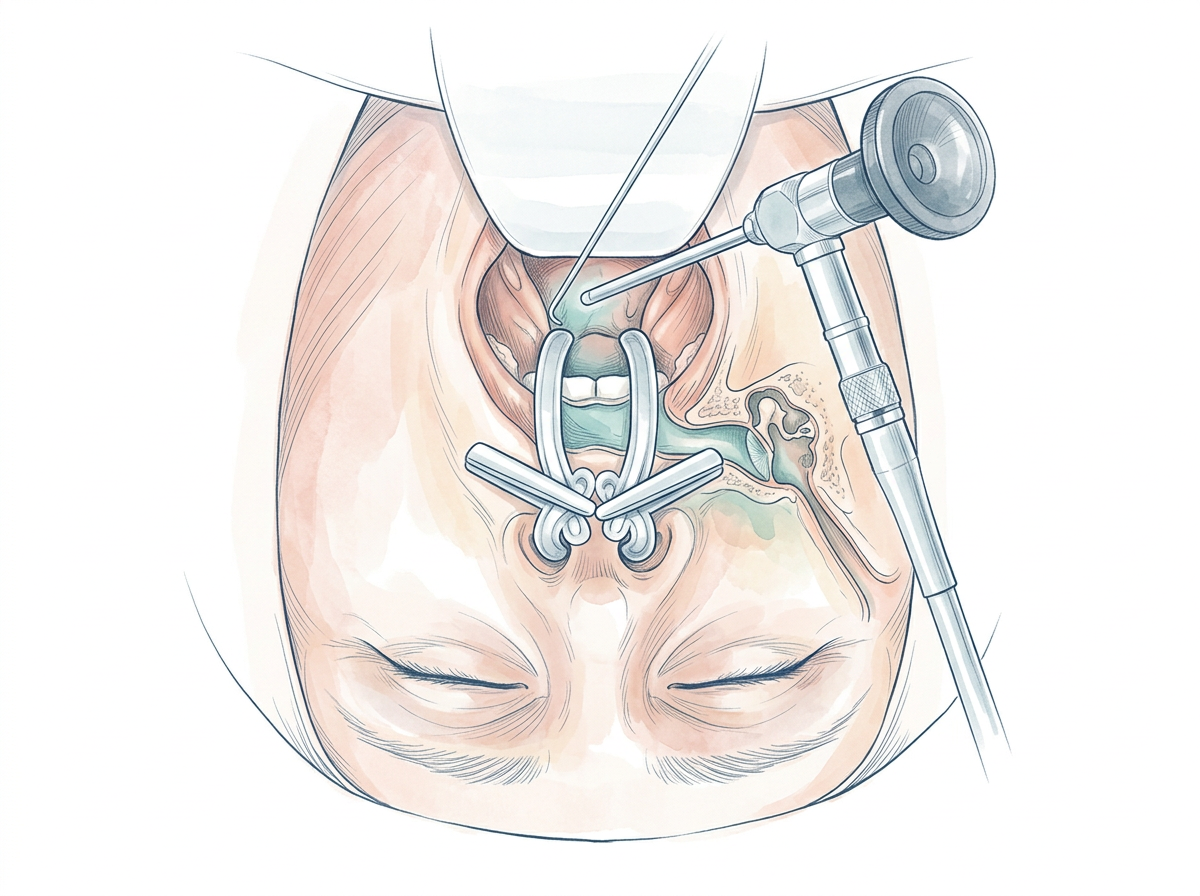
In Eustachian tube dysfunction with an open tube, ventilation of the ear is restricted or permanently open. A patulous tube, in which the Eustachian tube remains open permanently or for prolonged periods, affects approximately 6–7% of the population. Those affected often experience significant symptoms, including a feeling of pressure in the ear, clicking or crackling, distorted hearing, a feeling of ‘sitting under a bell’, a subjective reduction in hearing, autophony (an echo in the ear), and improvement in symptoms when lying down. The considerable distress can lead to psychological strain, and it is important to note that not all symptoms necessarily have a physical origin; they may also have psychosomatic causes.
Diagnosis
Diagnosis is made through an ENT examination, including assessment of the ear canal and eardrum. Further hearing tests are carried out to assess Eustachian tube function more precisely.
Treatment options
Treatment: Treatment depends on the patient's individual needs. Conservative approaches such as physiotherapy are preferred, and invasive methods may also be considered if necessary. Using VOX-Implants as a filling material may be helpful in reducing the diameter of the Eustachian tube. The treatment decision should be fully informed and reviewed regularly.
After the procedure
After surgery to reduce the diameter of the Eustachian tube, it is important to take care, particularly regarding the prohibition on nose-blowing and pressure equalisation from the second day onwards.