
Kopfzentrum Bielefeld
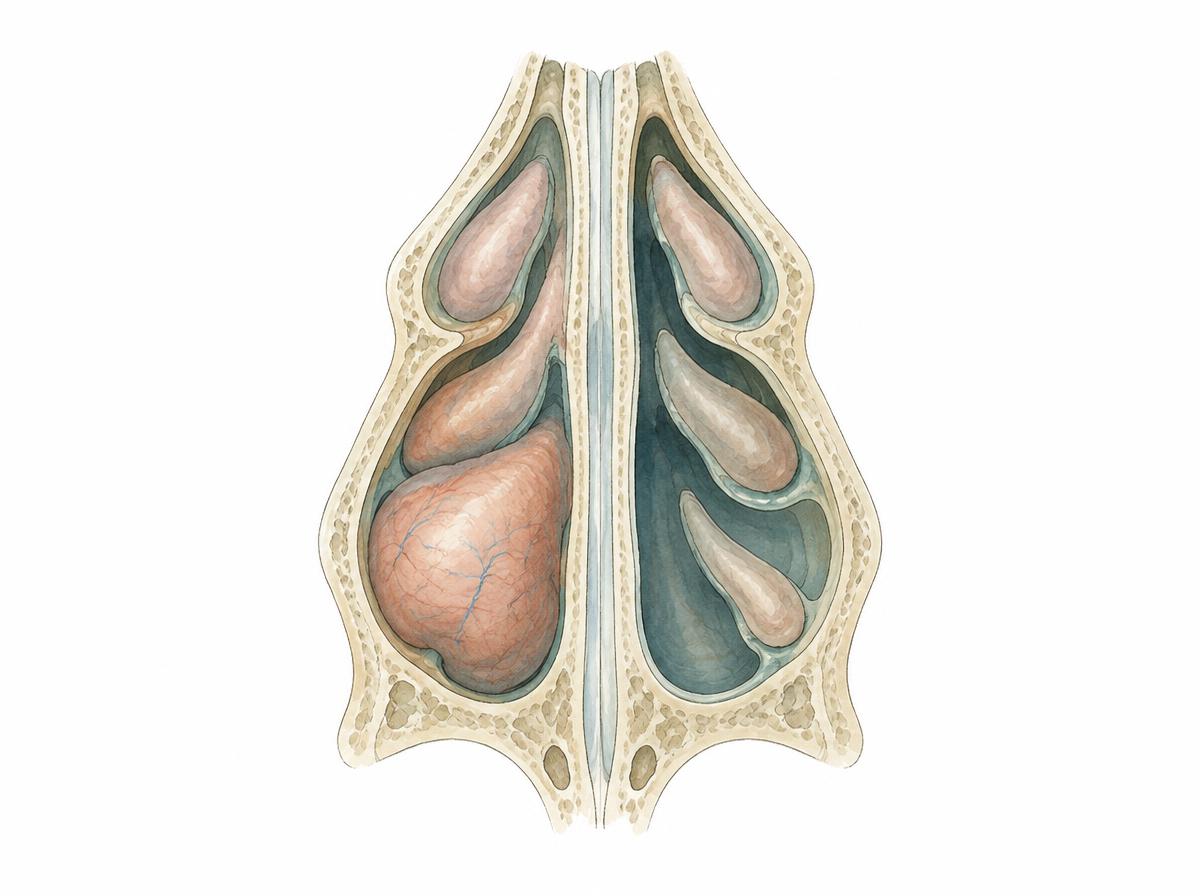
Turbinate hypertrophy
Diagnosis
In turbinate hypertrophy, the mucosa of the nasal turbinates, above all the inferior turbinate, is permanently thickened. Assessment is carried out by nasal endoscopy and examination of nasal breathing; rhinomanometry can measure the flow resistance in the nose.
Symptoms
Persistent obstruction of nasal breathing is typical, often alternating between the two sides. Mouth breathing, dry mucosa, a feeling of pressure at the root of the nose, worsening of symptoms when lying down at night and reduced smell perception may also occur.
Causes
Possible causes are long-term irritation by allergens, chronic inflammation, prolonged use of decongestant nasal sprays, obstruction of breathing by the nasal septum, or a congenital narrowing of the nasal passages.
Treatment options
Treating the underlying cause comes first, for example allergy therapy, care of the mucosa and giving up long-term decongestant medication. If these measures are not sufficient, surgical reduction of the turbinate may be considered. It is usually carried out in a mucosa-sparing way, for example by reducing the inferior turbinate. Whether and when a procedure is appropriate is decided medically in the individual case.