
Kopfzentrum Bielefeld
Allergen-specific immunotherapy
What is allergen-specific immunotherapy?
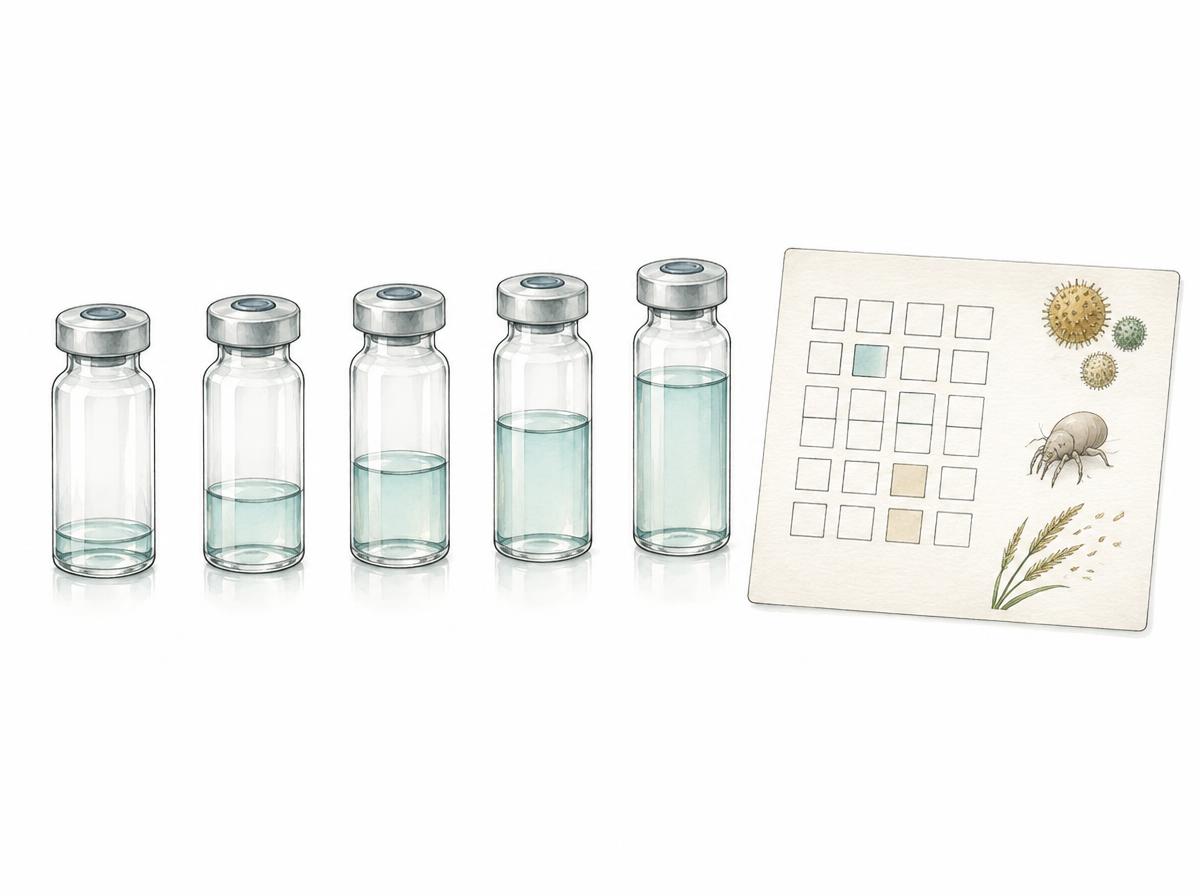
Allergen-specific immunotherapy, also called hyposensitisation, gradually accustoms the immune system to the trigger of an allergic reaction. It may be considered when an allergy to pollen, house dust mites, moulds or insect venom has been confirmed and symptoms persist despite avoidance measures and medication.
Areas of application
It can be used for allergic rhinitis and conjunctivitis, for allergic asthma and for insect venom allergy. Whether it is appropriate depends on the type of allergy, the severity of the symptoms and the individual circumstances.
Procedure
Before treatment begins, a medical assessment with allergy testing is carried out. Treatment is given either as an injection under the skin or as drops or a tablet taken through the oral mucosa. It consists of a build-up phase with gradually increasing doses followed by a maintenance phase and is usually continued over several years.
Prerequisites
Certain situations call for caution, for example severe or uncontrolled asthma, serious heart disease or pregnancy. Whether the therapy is suitable in an individual case is assessed medically before it starts.
After the treatment
After each dose, a medical observation period of about 30 minutes follows, since local or general reactions are possible. Reactions at home are recorded on the treatment card. If symptoms are more severe, the practice should be contacted promptly; regular follow-up appointments are part of the course of therapy.