
Kopfzentrum Bielefeld
Adenoid vegetations
Diagnosis
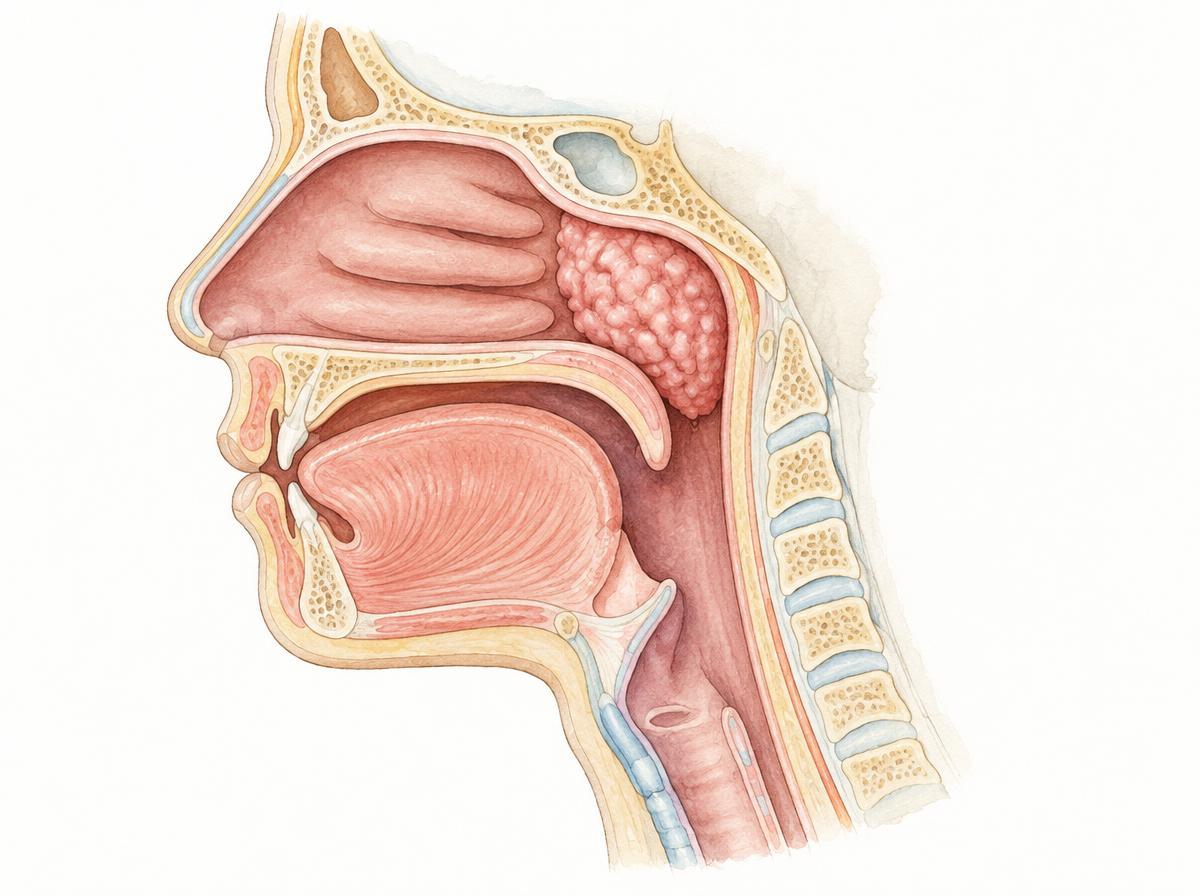
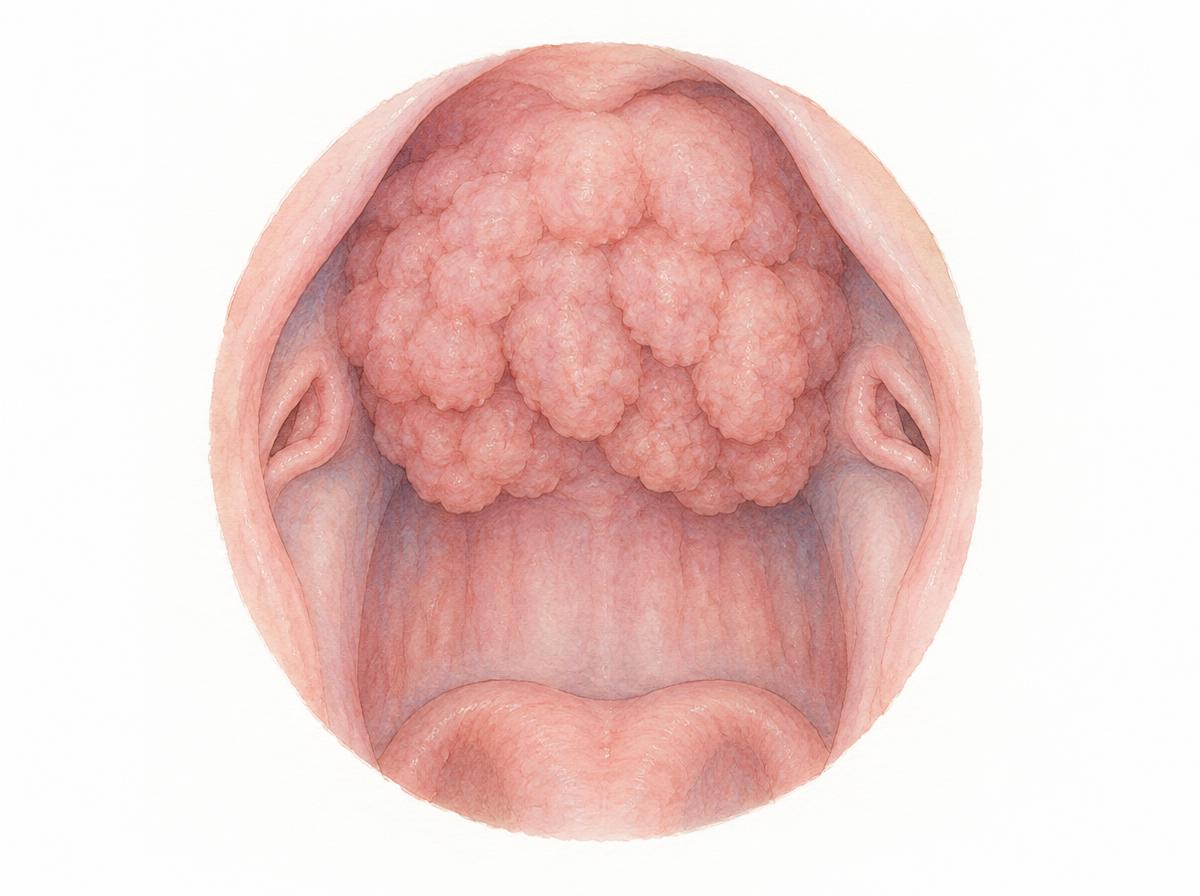
Adenoid vegetations are enlarged lymphoid tissue on the roof and posterior wall of the nasopharynx, in everyday speech often called ‘polyps’ or the pharyngeal tonsil. Assessment is usually carried out endoscopically through the nose and, if needed, supplemented by a hearing test.
Symptoms
Possible signs are blocked nasal breathing, mouth breathing, snoring, a nasal voice and repeated infections. Obstructive vegetations can impair ventilation of the middle ear; middle ear effusion and hearing loss are possible.
Causes
Adenoid tissue belongs to the lymphatic ring of the pharynx and may temporarily enlarge during childhood. Infections and allergies can promote this enlargement. In many children the tissue regresses later in childhood.
Treatment options
Where symptoms are mild, medical observation comes first. If nasal breathing is markedly obstructed, infections recur, middle ear effusions occur or snoring is pronounced, surgical removal of the adenoid tissue (adenoidectomy) may be considered. It is usually performed under general anaesthesia and can be combined with ventilation of the middle ear. Whether and when a procedure is advisable is decided individually by the physician.