
Kopfzentrum Bielefeld
Superior semicircular canal dehiscence
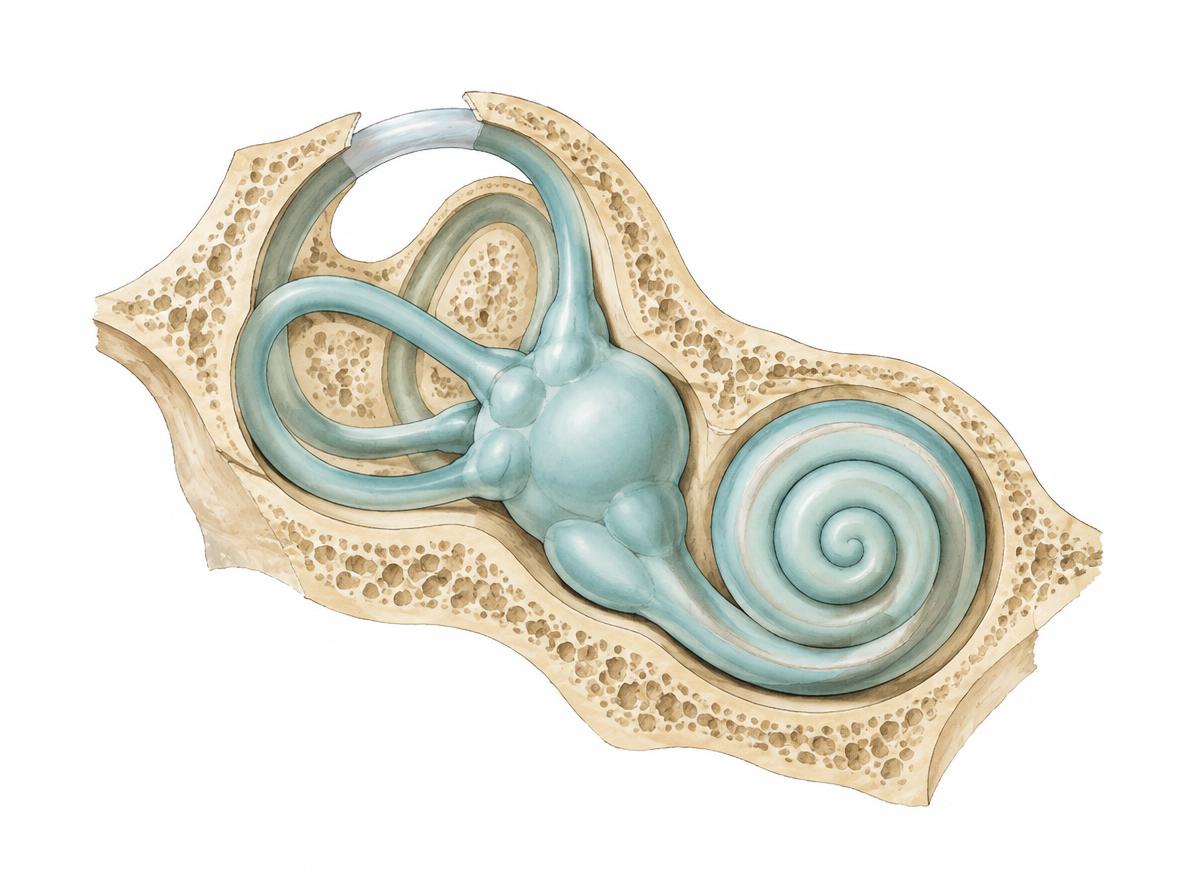
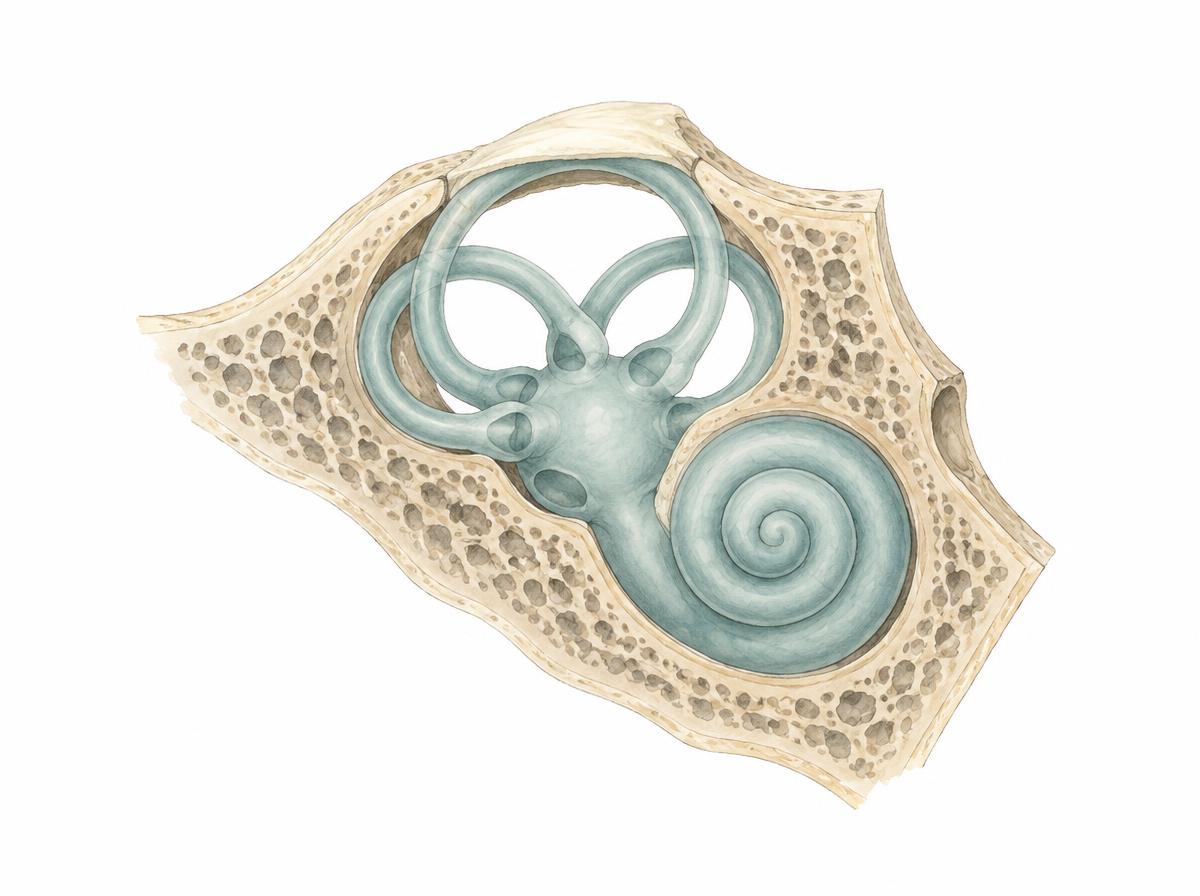
What is canal dehiscence?
In dehiscence of the superior semicircular canal, the bony cover over the uppermost canal is missing over a short span. Sound and pressure changes can then reach the inner ear by an unusual route and trigger symptoms.
Diagnosis
Diagnosis is made by high-resolution computed tomography of the temporal bone together with hearing and balance testing, in particular vestibular evoked myogenic potentials (VEMP).
Symptoms
Possible symptoms are sound- or pressure-induced spinning vertigo, a feeling of pressure in the ear, dizziness when straining, unusually loud hearing of one’s own voice or of body sounds, and hearing loss in one ear.
Treatment options
If complaints are minor, avoiding triggers and medical observation come first. For marked symptoms, surgical procedures are available: the exposed canal can be covered via the middle ear, for example as a round window membrane graft, or via the middle cranial fossa, where the defect is covered from above. Which approach is suitable is decided medically after computed tomography and balance findings.