
Kopfzentrum Bielefeld
Transcranial magnetic stimulation for chronic tinnitus
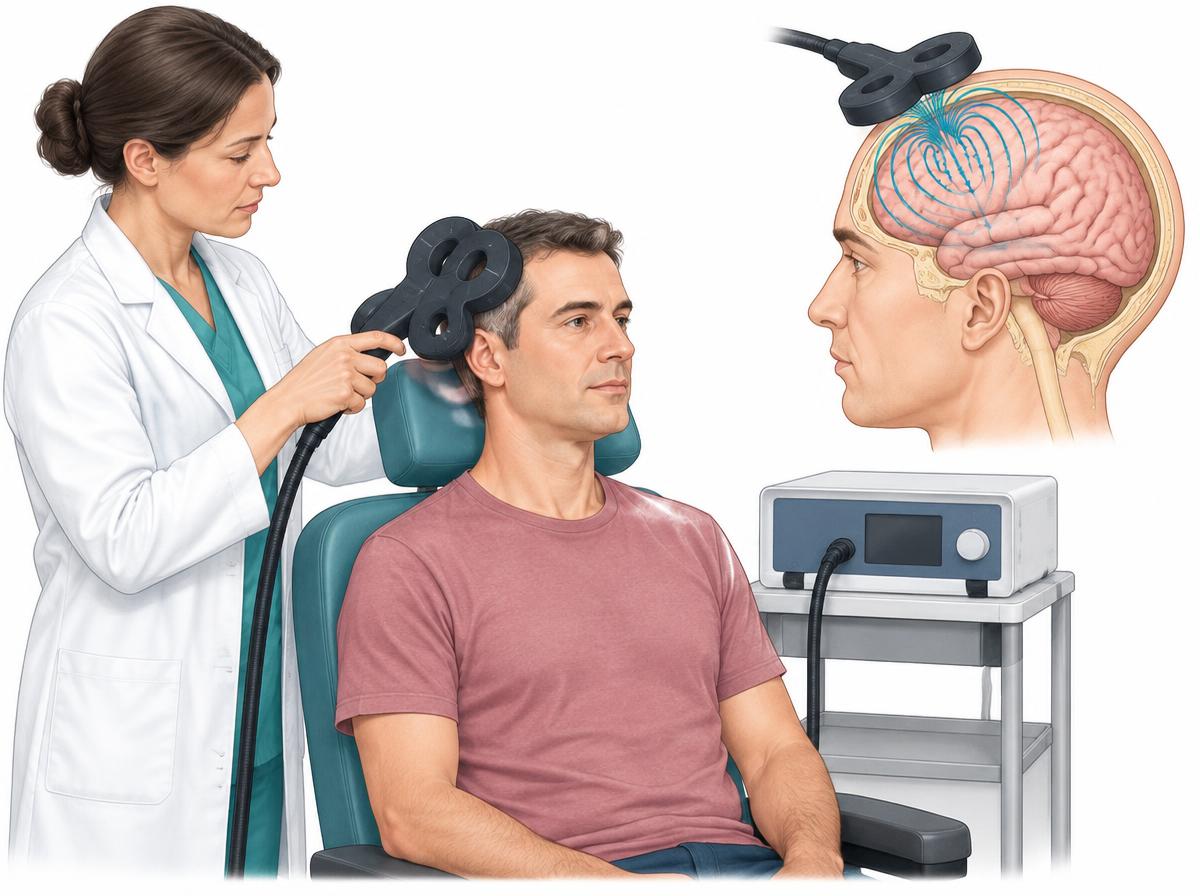
In repetitive transcranial magnetic stimulation (rTMS), a coil placed against the scalp generates short magnetic pulses. The procedure is being studied, among other things, as a way to influence the activity of brain regions involved in perceiving and processing tinnitus.
Role in chronic tinnitus
rTMS is not an established standard treatment for chronic tinnitus. The German S3 guideline does not recommend it for this purpose because reliable therapeutic benefit has not been sufficiently demonstrated. Studies report differing results; lasting improvement or a cure cannot be guaranteed.
Before making a decision, an assessment by an ear, nose and throat specialist and a discussion of guideline-recommended options should take place, such as counseling, tinnitus-focused behavioral therapy and, where there is a corresponding degree of hearing loss, hearing aids. This page describes the procedure and does not replace individual medical advice.
Procedure and safety
During stimulation, the coil is positioned against the scalp. The pulses produce a distinct clicking sound; appropriate hearing protection is important. Whether treatment is an option, and under what conditions, must be assessed beforehand by an appropriately qualified treatment team.
Possible side effects include headaches and pain or discomfort at the scalp. Seizures can occur rarely. Epilepsy or previous seizures, as well as metallic or electronic implants in the head region, must be disclosed and carefully assessed before treatment. This applies particularly to cochlear implants; device safety must be checked on an individual basis.