
Kopfzentrum Bielefeld
Parathyroid surgery
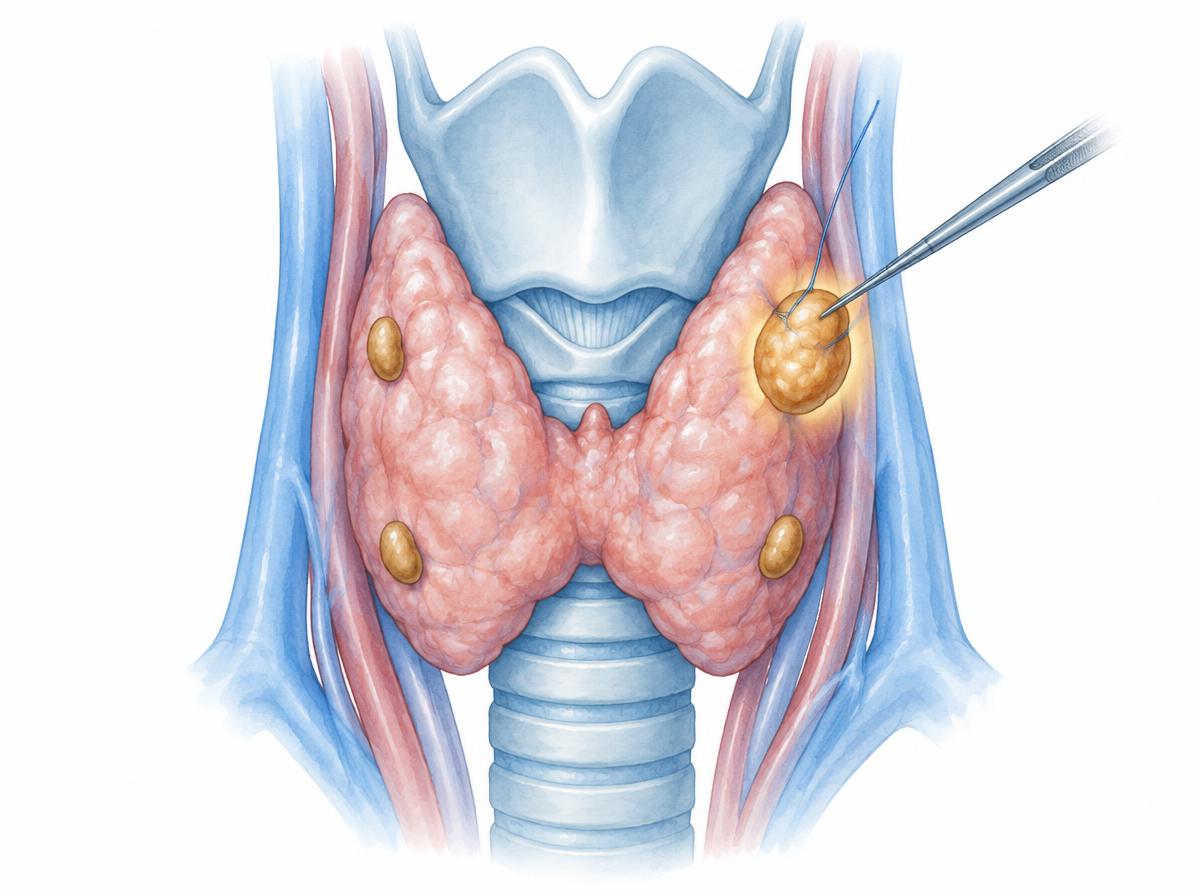
The parathyroid glands are four small glands on the back of the thyroid gland that regulate the blood calcium level through parathyroid hormone. Parathyroid surgery removes one or more of them when they produce too much hormone – usually because of a benign adenoma. The aim is to remove the enlarged tissue and preserve the healthy glands.
When is parathyroid surgery performed?
The typical reason is primary hyperparathyroidism: the blood contains too much calcium and too much parathyroid hormone. In most cases a single benign adenoma is the cause; less often several glands are affected. Whether surgery is appropriate is planned individually after blood tests, urine measurements and imaging such as ultrasound, and is explained in the consultation.
Course of the procedure
The operation is performed under general anaesthesia through a small skin incision on the neck. The surgeon locates the enlarged gland and removes it, while the remaining parathyroid glands and their blood supply are preserved as far as possible. Depending on the findings, all four glands are identified or the search is limited to the gland located in advance. We inform you about the length of the hospital stay before the procedure; after the operation the wound and calcium levels are monitored.
Risks and aftercare
As with any procedure, parathyroid surgery carries risks that are discussed in detail during the pre-operative consultation. Possible effects are temporary or, less often, permanent voice or swallowing disturbances, post-operative bleeding or a temporarily low calcium level, which can be corrected with calcium and vitamin D supplements. After the operation the calcium and parathyroid hormone levels are monitored; aftercare is planned individually.