
Kopfzentrum Bielefeld
Panendoscopy
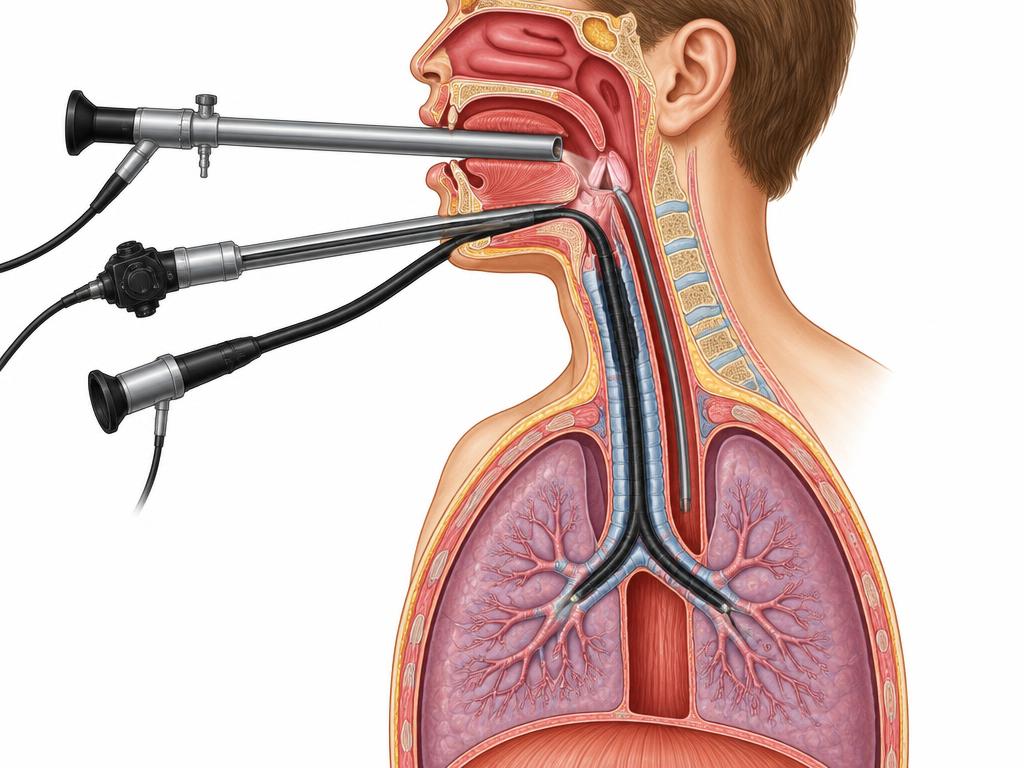
Panendoscopy is an endoscopic examination of the upper airways and digestive tract under general anaesthesia. It comprises microlaryngoscopy of the larynx, diagnostic bronchoscopy of the trachea and bronchi, and oesophagoscopy of the oesophagus. Its main purpose is the precise assessment of tumours in the head and neck region and the search for possible second primary tumours.
When is panendoscopy performed?
Typical indications are a proven or suspected tumour in the mouth, throat or larynx, enlarged neck lymph nodes without an identifiable primary tumour, and unexplained symptoms such as persistent hoarseness, swallowing difficulties or blood in the sputum. Before planned tumour surgery, the examination helps to define the extent of the disease.
Course of the examination
Panendoscopy is performed under general anaesthesia, usually during a short inpatient stay. Using rigid or flexible endoscopes, the larynx, the trachea with the bronchial system and the oesophagus are inspected in sequence. Suspicious areas are documented by photo or video.
Samples (biopsies) are taken from suspicious tissue and examined histologically. Only the result of this examination provides certainty about the nature and extent of a finding and forms the basis for further treatment planning, which is discussed in the interdisciplinary tumour board.
Risks and aftercare
Panendoscopy is an established procedure; serious complications are rare. Possible effects include temporary hoarseness, sore throat or dental injury from the rigid instruments; after biopsies, slight bleeding may occur. On the day of the examination, nothing should be eaten or drunk until the anaesthetic effect has worn off and the swallowing reflex has recovered; the team will give specific instructions.