
Kopfzentrum Bielefeld
Ménière’s disease with saccotomy
What is Ménière’s disease?
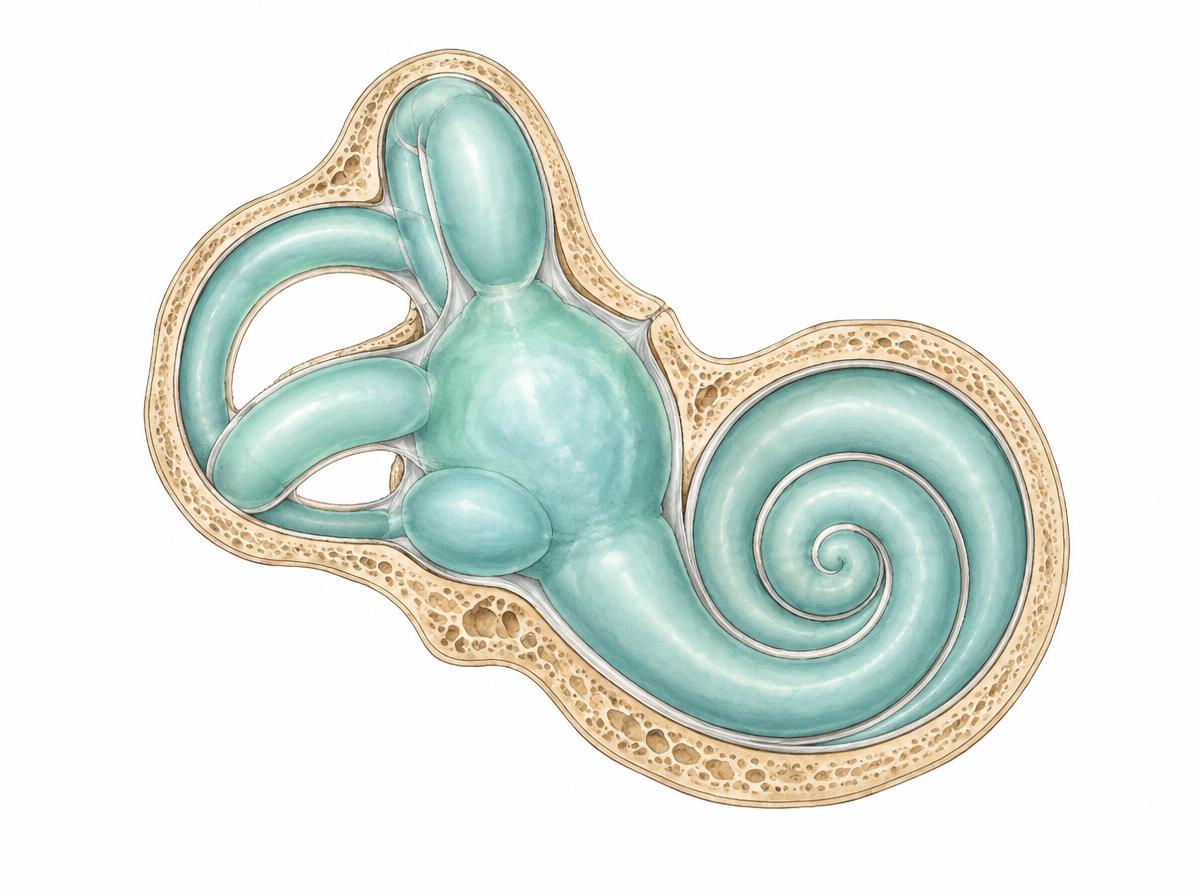
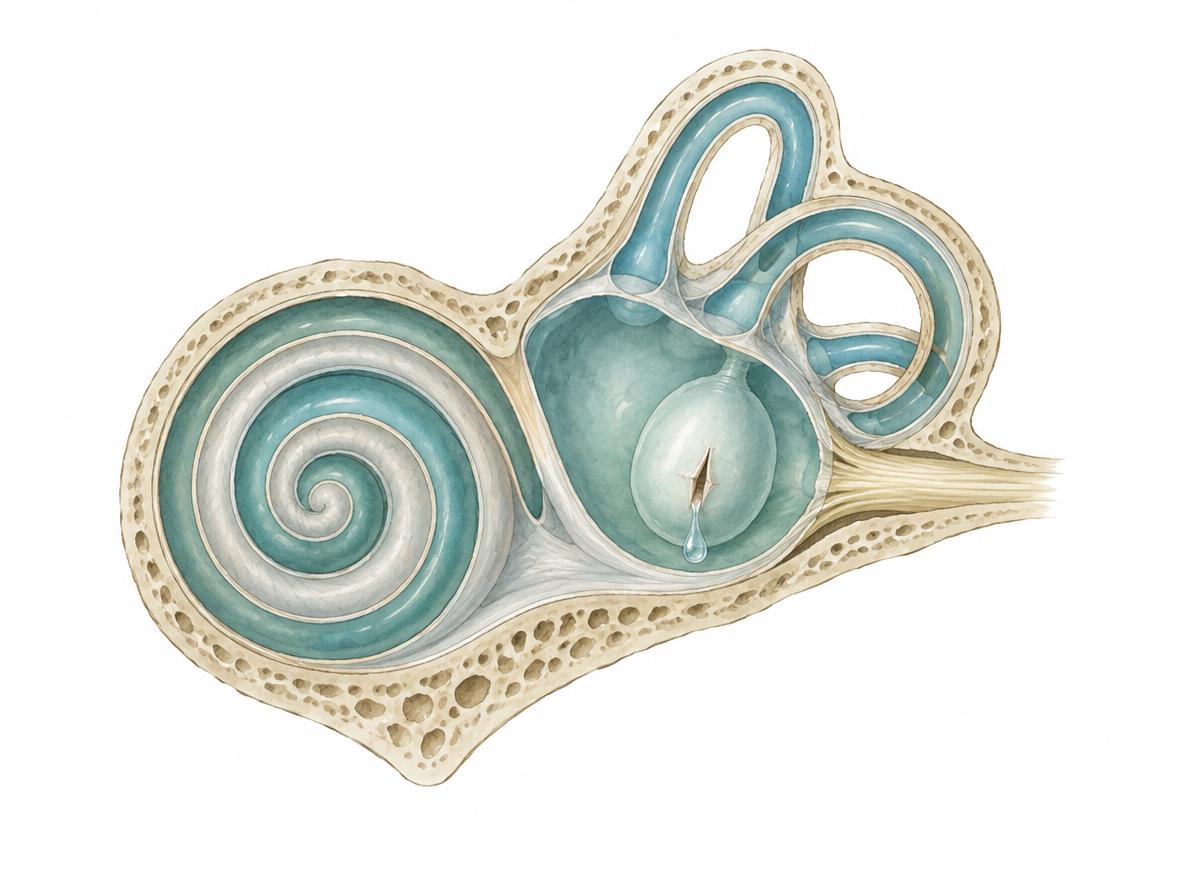
Ménière’s disease is a disorder of the inner ear in which the endolymph-filled spaces of the membranous labyrinth widen. It usually affects one ear, occurs in attacks and can permanently impair hearing and balance.
Diagnosis
The diagnosis is made from the clinical course and from hearing and balance testing. Cross-sectional imaging, for example magnetic resonance imaging or computed tomography, serves to exclude other causes.
Symptoms
Typical are spinning vertigo attacks lasting minutes to hours, combined with a feeling of pressure in the ear, fluctuating hearing loss, ringing and nausea. Between attacks hearing may recover at first; over time the hearing loss can become permanent.
Treatment options
First-line measures are lifestyle and dietary changes such as a low-salt diet, medication for the attacks, and balance training. If attacks persist, medication can be given through the eardrum into the middle ear. In selected cases, procedures on the inner ear may be considered, including saccotomy: the saccule is opened to relieve pressure in the membranous labyrinth. Whether such a procedure is appropriate is decided medically after hearing and balance findings.