
Kopfzentrum Bielefeld
Neck dissection
When is a neck dissection needed?
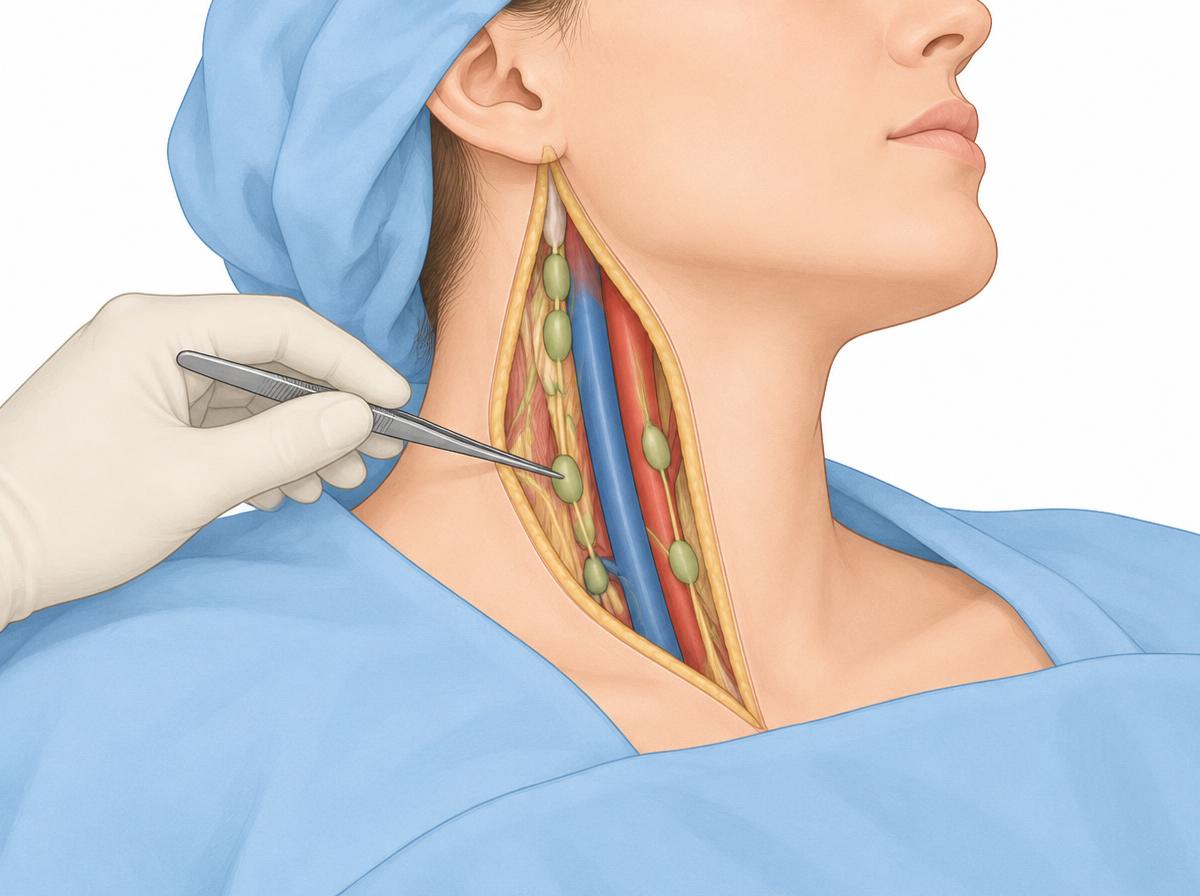
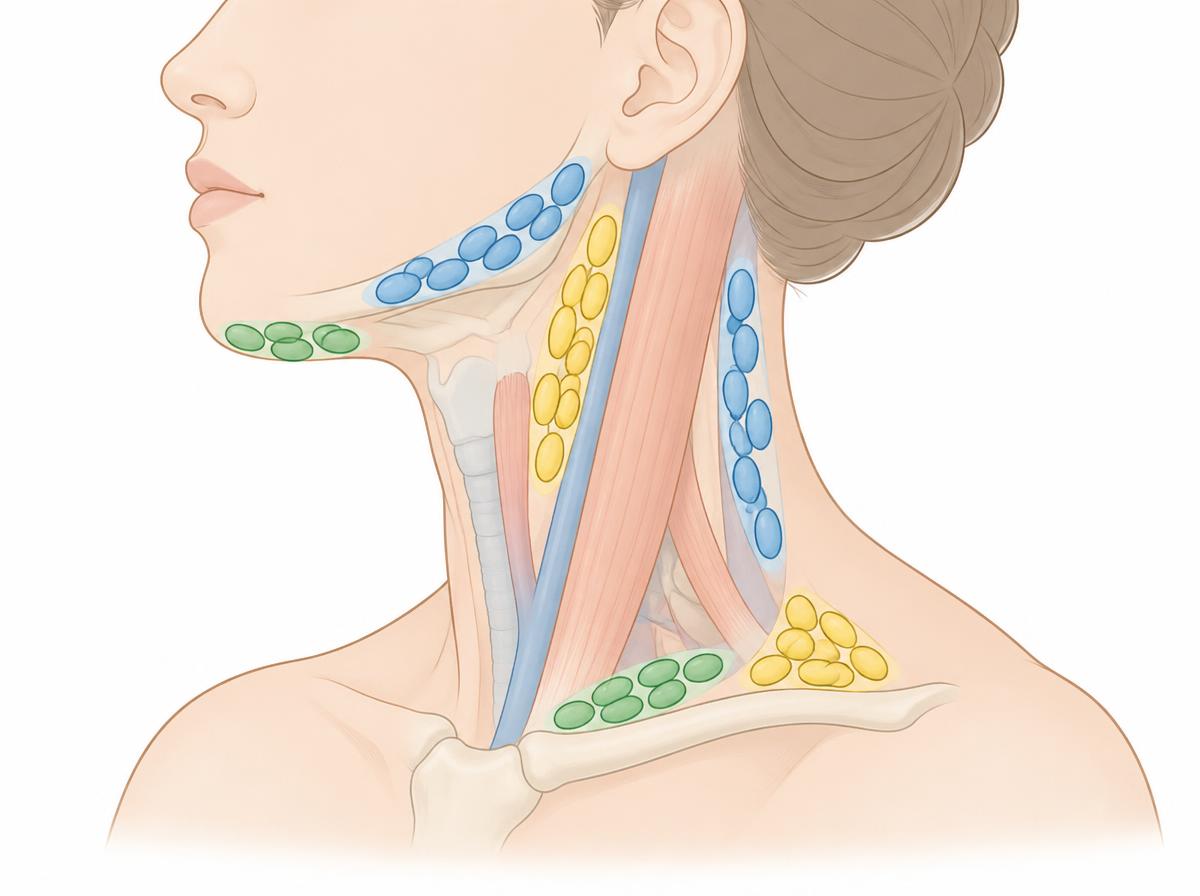
In cancers of the head and neck, cancer cells travel first with the lymph to the lymph nodes of the neck. A neck dissection removes the affected lymph node stations when spread has been proven or is reasonably suspected. It is an important component of treatment, for example in cancer of the oral cavity, the throat, the larynx or the thyroid gland.
Diagnosis and planning
Ultrasound of the neck, computed tomography or magnetic resonance imaging show the size and position of suspicious lymph nodes; fine-needle aspiration can clarify the findings. The extent of the operation is planned individually from these results and agreed in the interdisciplinary tumour board.
Types of surgery
The basic form is the radical neck dissection, in which all lymph node stations of one side of the neck are removed. In the modified radical form the lymph nodes are removed while important structures such as muscles, nerves or vessels are preserved; this is the most common type today. The selective neck dissection is limited to the stations where the tumour is most likely to spread.
Course of the operation
The operation is performed under general anaesthesia and usually requires an inpatient stay. Through an incision in the neck, the agreed lymph node stations are removed together with the surrounding fatty and connective tissue, while nerves and major blood vessels are preserved as far as possible.
After the procedure
After the operation the patient is monitored in hospital, usually with drains in the neck. The skin of the ear and side of the neck may be temporarily numb, and swelling is common. Regular cancer follow-up appointments with examination, ultrasound and imaging accompany the ongoing care.