
Kopfzentrum Bielefeld
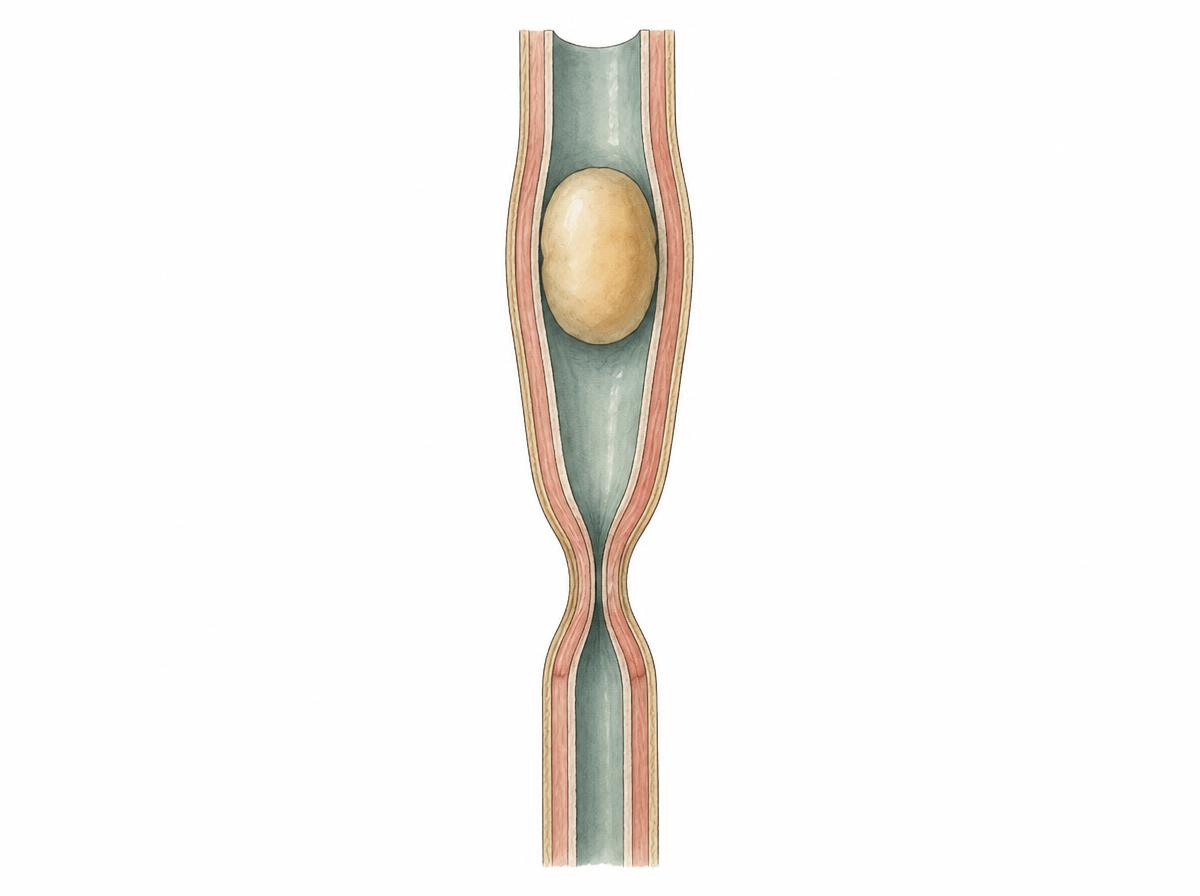
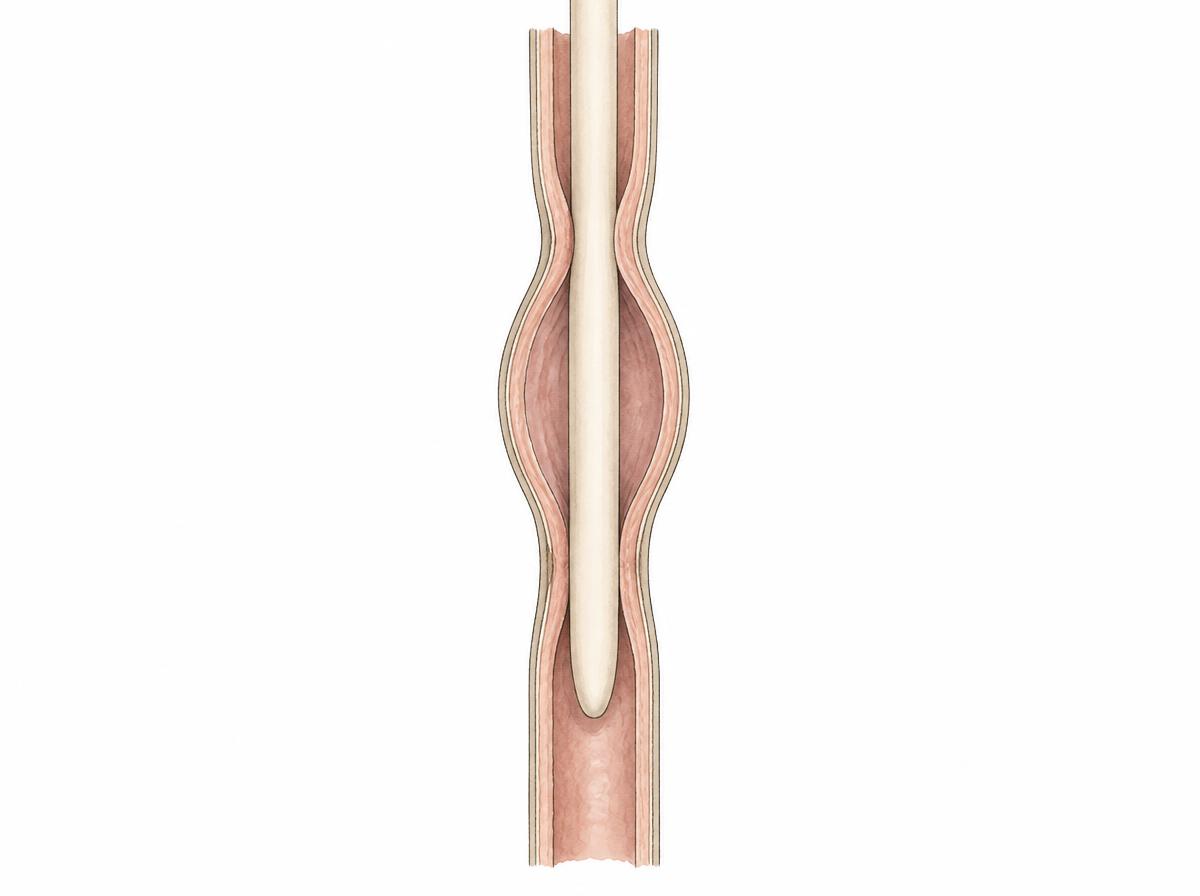
Esophageal stricture with bougie dilation
Diagnosis
In an oesophageal stricture, the food pipe is narrowed at one or more places. Assessment is carried out by endoscopy of the oesophagus and stomach with tissue biopsies; a barium swallow or computed tomography can additionally show how long and how narrow the narrowing is.
Symptoms
Typical is a feeling of obstruction when swallowing solid food, increasing over time: the bite sticks and has to be washed down with fluid. Later, liquids may also pass with difficulty; clearing the throat, excess saliva in the mouth, coughing during meals and unintentional weight loss may occur. If a bite becomes completely stuck, medical attention in the practice or hospital is required.
Causes
Most often a benign stricture follows long-standing reflux disease or an operation on the oesophagus or stomach. Further causes are radiotherapy in the chest area, corrosive injuries, mucosal damage caused by tablets, eosinophilic oesophagitis and benign tumours. Because a swallowing disorder can also hide a malignant change, the mucosa is assessed endoscopically and tissue is sampled before any dilation.
Treatment options
Treating the cause comes first, for example reflux with acid-suppressing medication, or eosinophilic oesophagitis with dietary changes and anti-inflammatory therapy. If the narrowing obstructs swallowing, it is usually dilated endoscopically. In bougienage, a gently tapered dilutor (a bougie) is guided over a guide wire through the tight segment and the wall is stretched carefully; balloon dilation is available as an equivalent alternative. Dilation is usually performed in several small steps rather than one large one, in order to spare the mucosa. If this is not sufficient, further sessions, a local injection, a temporarily placed stent, or a small incision of the scar may be required.
After the procedure come a short period of observation and a temporary dietary adjustment, starting with soft food. Because strictures can recur, swallowing complaints are checked at follow-up and dilations are repeated if needed. If the tight segment persists despite repeated dilations, the approach is discussed again within the team.