
Kopfzentrum Bielefeld
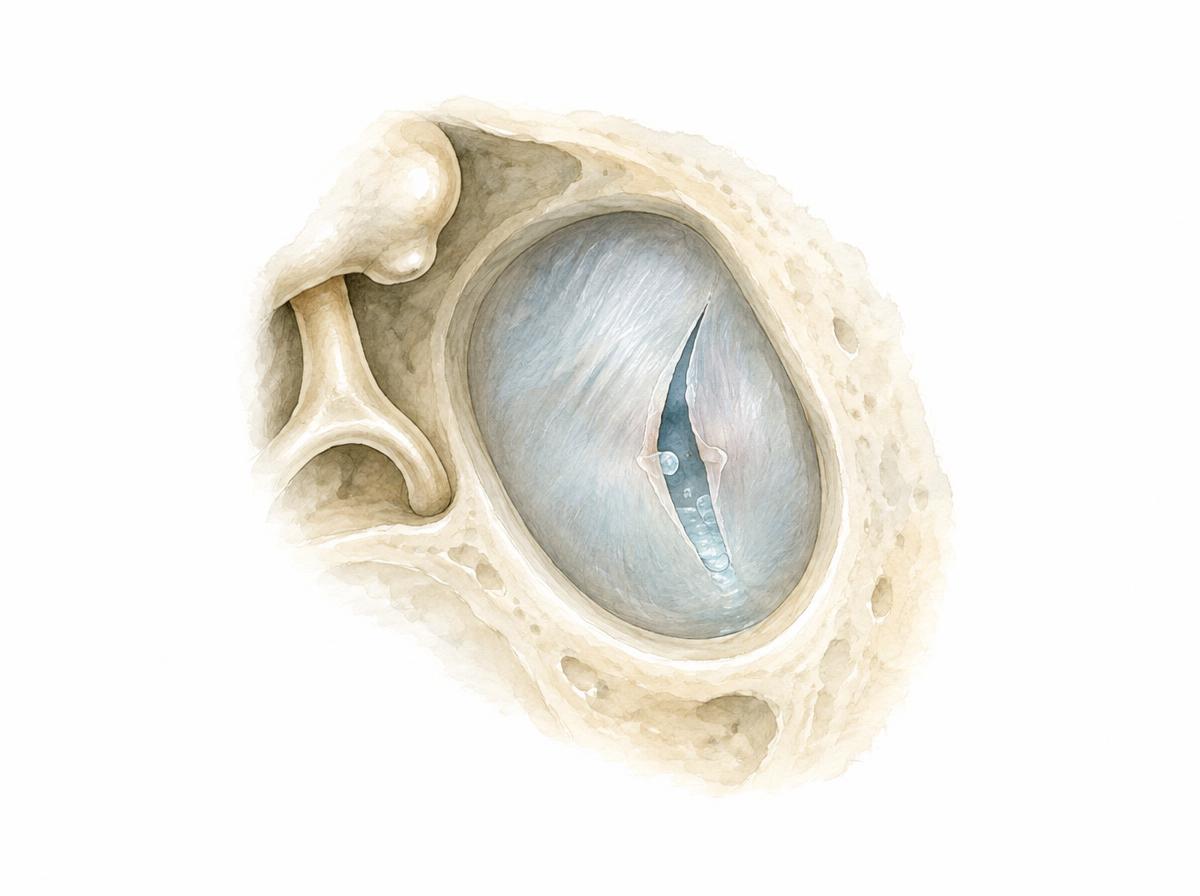
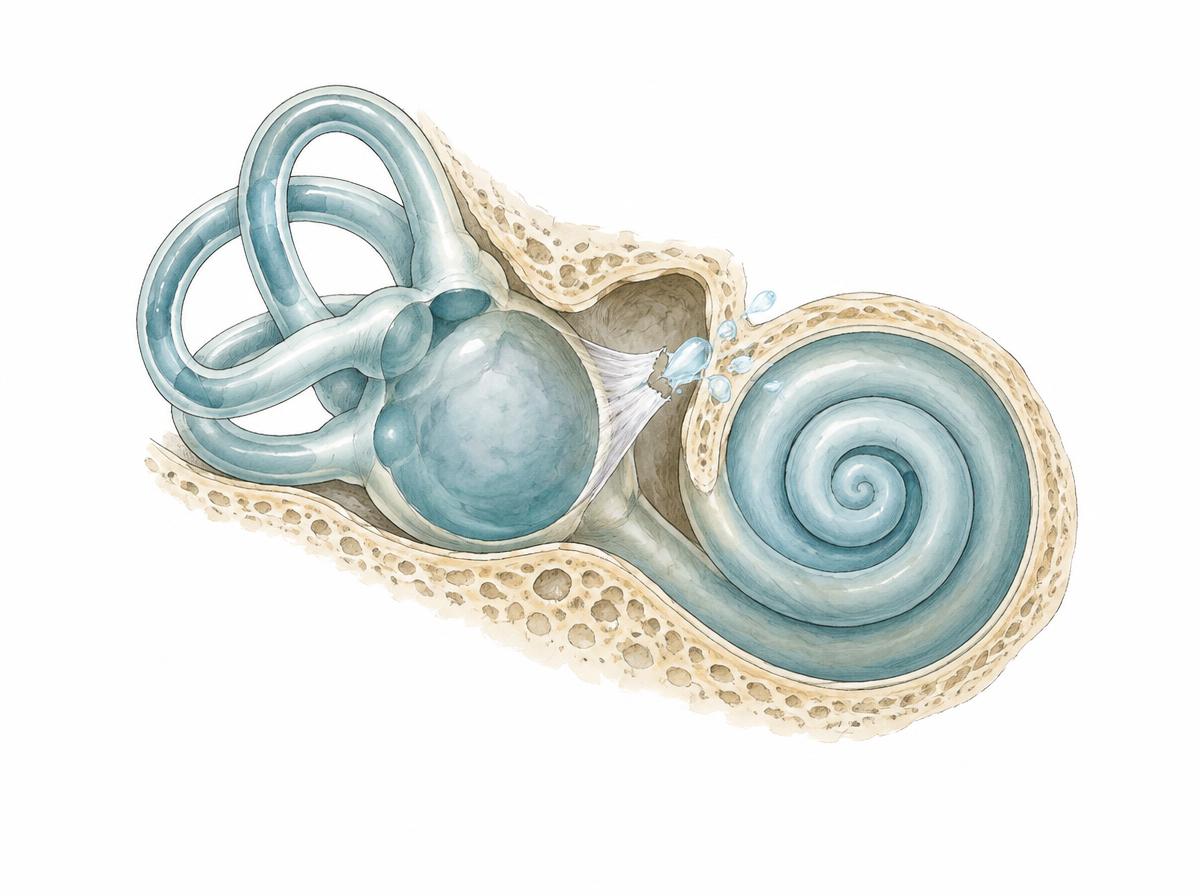
Round window membrane rupture in perilymph fistula
Diagnosis
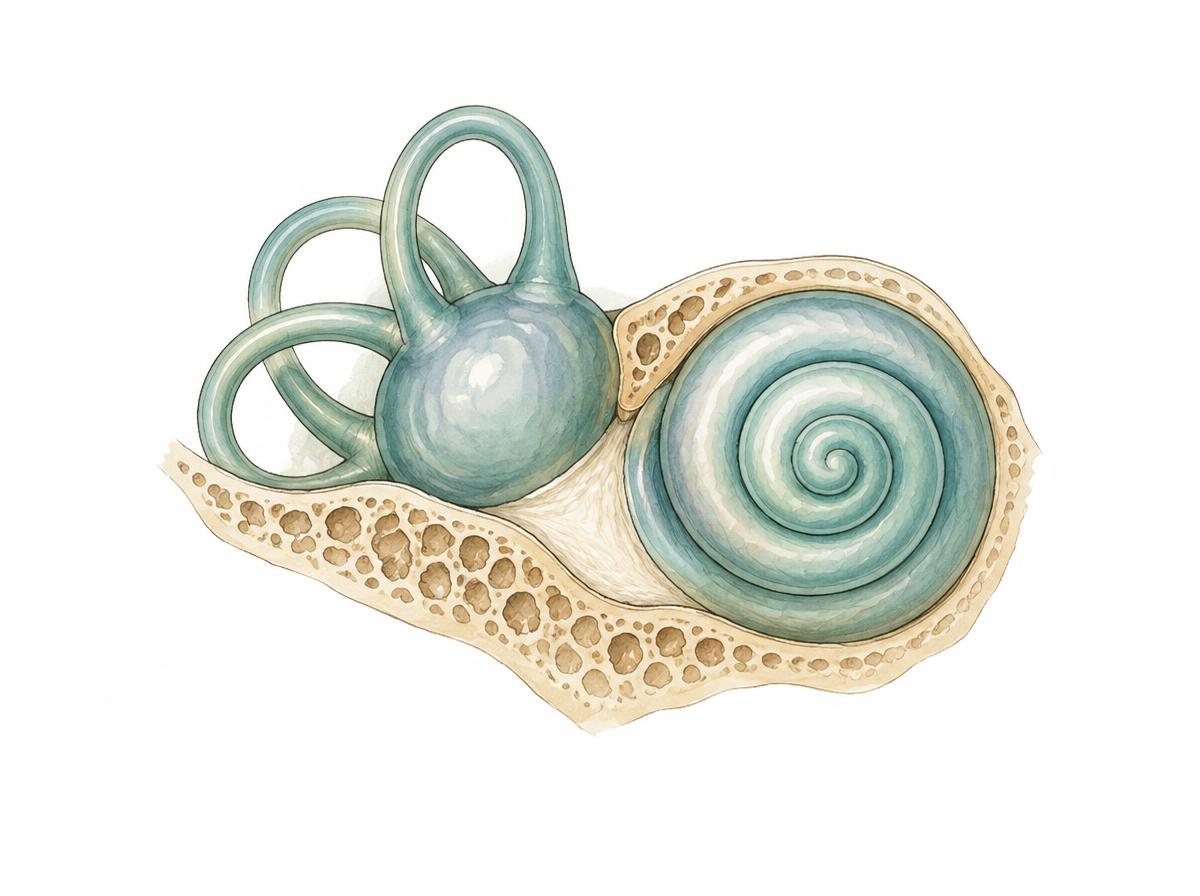
A perilymph fistula is a leaking connection between the inner ear and the middle ear; most often it rests on a rupture of the thin membrane that closes the round window. Assessed are otoscopy, pure-tone and speech audiometry, tympanometry and a balance examination. Because the leak can close in the course of the illness or be very small, diagnosis is difficult; endoscopic display of the middle ear structures and, when a bony dehiscence is suspected, high-resolution computed tomography can support classification.
Symptoms
Typical are spinning or swaying dizziness triggered or worsened by pressure changes, straining, sneezing, lifting or loud noises, together with a feeling of pressure in the ear, tinnitus and a hearing loss that appeared suddenly or in episodes on the affected side. In some people the dizziness increases in a particular body position or when pressure is applied to the ear.
Causes
Most often perilymph fistulas follow a head injury, a barotrauma — for example in diving, flying, or after a blow to the ear —, a middle or inner ear operation, or a sudden pressure rise in the chest and neck. Some findings arise without any recognisable trigger. Congenital openings at the internal auditory canal, a dehiscence of the superior semicircular canal, or a malformation of the oval window predispose to the leak.
Treatment options
Conservative treatment comes first: physical rest with the trunk raised, avoiding straining, lifting, pressing and forceful blowing, and treatment of cough and constipation; while the leak persists, diving, flying and heavy work are discouraged. If the leak continues or the hearing loss is substantial, the membrane is closed surgically: through the ear canal or behind the ear the middle ear is exposed, the niche of the round window is laid bare and covered with the person’s own tissue — connective tissue, fat, perichondrium or fascia; with a fistula at the oval window the coverage is carried out correspondingly. After the procedure come a period of rest and checks of hearing and balance; if the hearing loss remains, hearing aids or, with bilateral loss, a cochlear implant may be considered.