
Kopfzentrum Bielefeld
Thyroid surgery with neuromonitoring
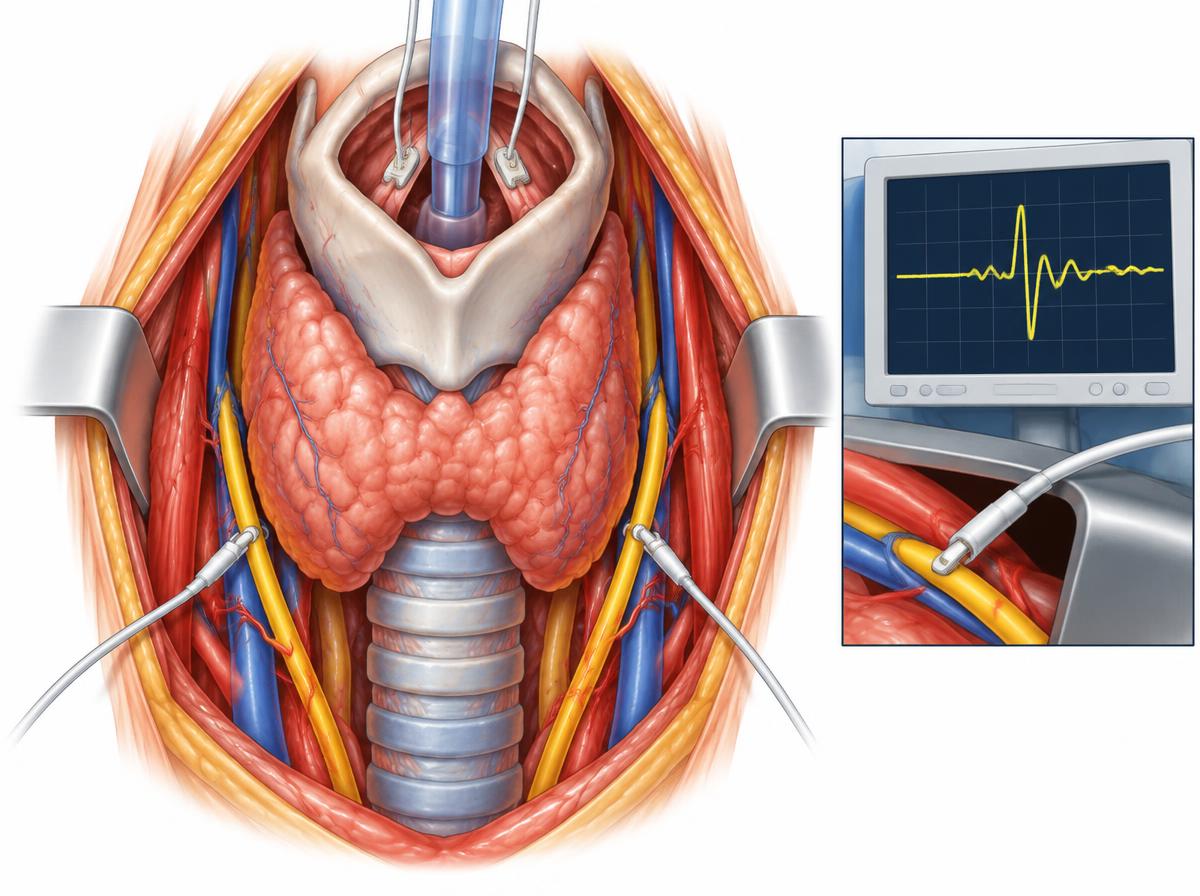
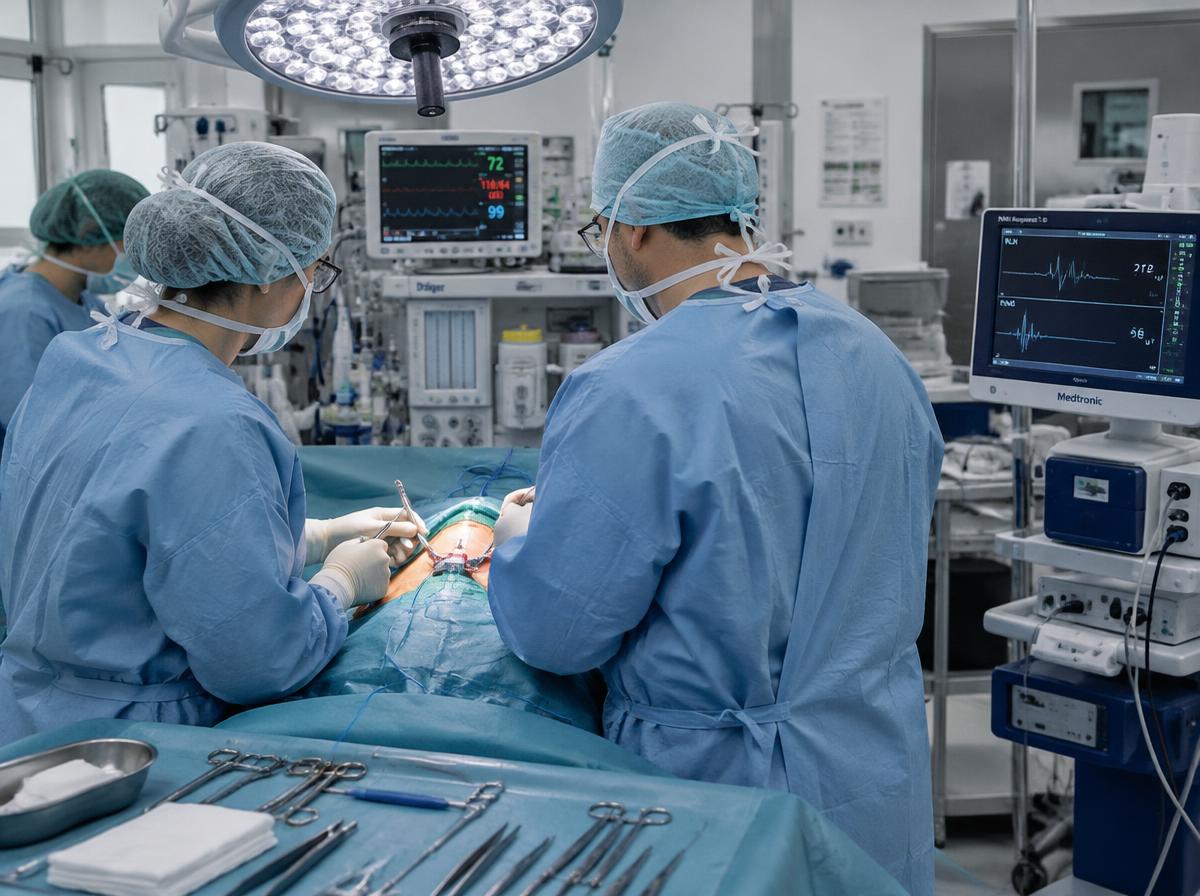
Thyroid surgery covers operations on the thyroid gland, such as removal of an enlarged or nodular lobe (hemithyroidectomy) or of the entire gland (thyroidectomy). In these procedures the recurrent laryngeal nerve, which supplies the vocal folds, runs directly through the operative field. Neuromonitoring continuously measures the function of this nerve during the operation to help identify and preserve it.
When is thyroid surgery performed?
Typical reasons are enlargement of the thyroid gland (goitre), nodules that require further assessment, suspicion of or confirmed thyroid cancer, and overactivity that cannot be adequately treated with medication. Which operation is appropriate in each case depends on the findings and is planned individually after examination and, if necessary, a tissue sample.
What is neuromonitoring?
In neuromonitoring, a tube with integrated electrodes that rest against the vocal folds is used for the operation. During dissection the nerve is gently stimulated with a fine probe; if the stimulus triggers a response of the vocal fold muscles, the monitoring device displays this as a curve and an audible signal. In this way the nerve can be located and its function continuously checked. Neuromonitoring complements careful surgical technique; it does not replace it.
Course of the procedure
The operation is performed under general anaesthesia through a skin incision on the neck. After exposing the thyroid gland, the nerves are carefully identified and checked with neuromonitoring. Depending on the findings, a lobe or the entire gland is removed; the parathyroid glands and their blood supply are preserved as far as possible. We inform you about the length of the hospital stay before the procedure; after the operation the wound is monitored and voice and swallowing are observed.
Risks and aftercare
As with any procedure, thyroid surgery carries risks that are discussed in detail during the pre-operative consultation. Possible effects are temporary or, less often, permanent voice or swallowing disturbances, disturbances of calcium metabolism caused by impairment of the parathyroid glands, post-operative bleeding or scar formation that may need treatment. After complete removal of the gland, thyroid hormones must be taken permanently as tablets; also after partial removals, checks of hormone levels may be necessary. Aftercare is planned individually.