
Kopfzentrum Bielefeld
Sentinel lymph node (gamma camera and gamma probe)

What is a sentinel lymph node?
The sentinel lymph node is the first lymph node into which lymph from a tumour region drains. If tumour cells spread through the lymphatic vessels, they usually reach this first station. Its result therefore shows whether a deposit in the neck nodes is present and helps to plan the extent of surgery.
When is it examined?
The procedure is established above all for skin cancer (malignant melanoma) of the head and neck, and additionally for selected tumours of the oral cavity and scalp. The decision is made individually: the benefit depends on the type of tumour, its thickness or extent, and the other findings.
Imaging with the gamma camera
For lymphoscintigraphy, a small amount of a weakly radioactive labelled substance is injected into the skin beside the tumour or the former tumour site. The lymph carries it to the draining lymph nodes. A gamma camera records the pathway and shows which nodes become active first. Cross-sectional images (SPECT/CT) frequently supplement the scan in order to define the position in the neck more precisely. The skin above the marked node is labelled before surgery.
Removal during surgery
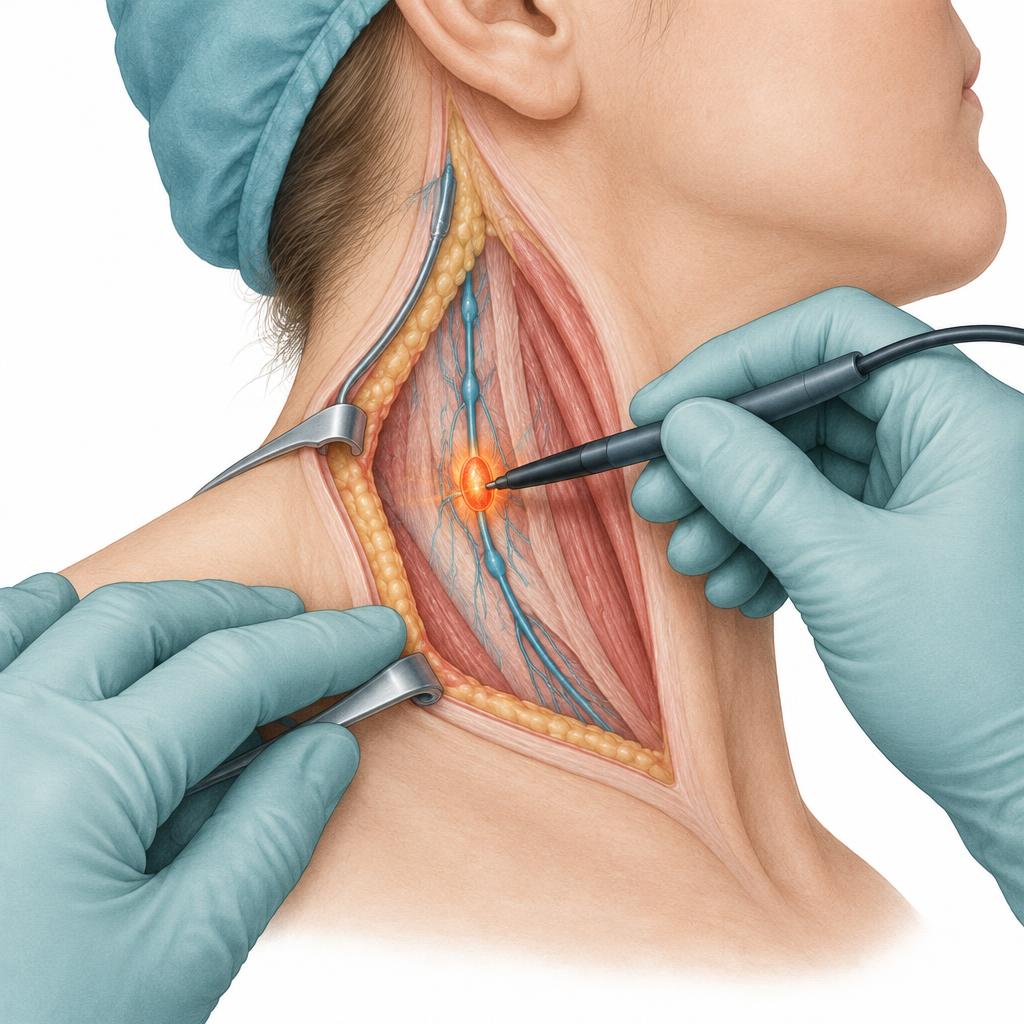
During the operation a fine radiation detector (gamma probe) follows the signal of the marked node. This allows the sentinel lymph node to be located even where it lies deep between vessels and nerves. It is removed and examined microscopically; sometimes a first assessment is made during the procedure itself in order to decide the next steps while the patient is still under the same anaesthesia.
What follows from the result?
If the sentinel lymph node is free of tumour cells, an extensive dissection of the neck lymph nodes can often be avoided. If it is involved, further treatment is discussed – for example a neck dissection, radiotherapy, or both. The team makes the decision together with the patient on the basis of the histological result.
Frequently asked questions
Do I have to be isolated because of the radioactivity? No. The amount used is very small and there is no obligation to isolate. Reactions to the labelled substance are rare and are monitored as with any injection.
Does the imaging hurt? The injection of the labelled substance is felt as a small prick. The gamma camera recording itself causes no pain; it takes place, like an X-ray, while lying down.
What if several nodes are active? Then all nodes that become active first are removed and assessed separately. The number of sentinel lymph nodes can vary depending on the lymphatic drainage area.