
Kopfzentrum Bielefeld
Semicircular canal occlusion for untreatable BPPV
Diagnosis
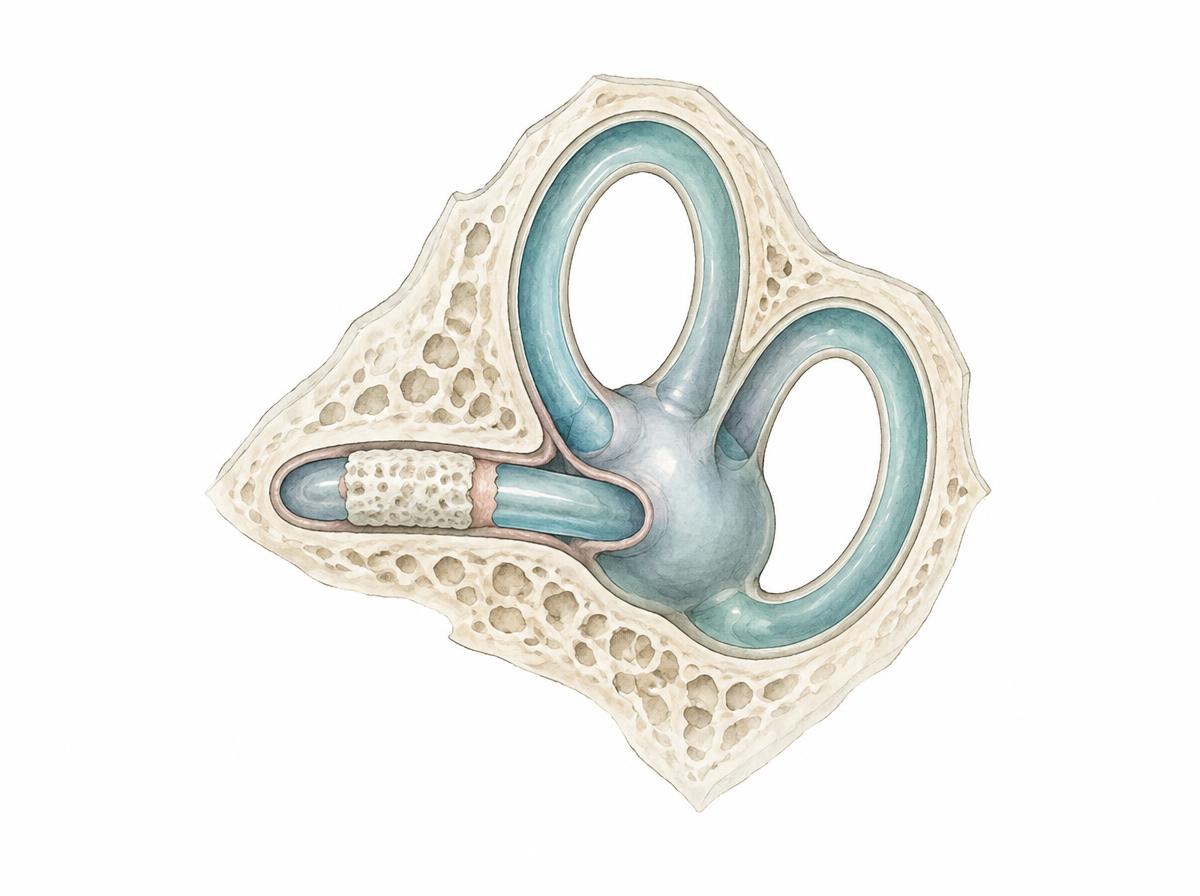
Benign paroxysmal positional vertigo (BPPV) arises when fine calcium crystals leave the utricular macula and enter a semicircular canal, where they disturb the flow of endolymph. It is diagnosed by a positioning manoeuvre with measurement of the eye movements — the nystagmus indicates which canal is affected; the most common form involves the posterior canal. Before an operation, other causes of positional vertigo must be excluded, for example a canal dehiscence, a perilymph fistula or a central disorder in the cerebellum.
Symptoms
Typical are short, intense episodes of spinning dizziness triggered by changes of position — turning over in bed, sitting up, lying down or bending —, accompanied by nausea, vomiting, sweating and a strong sense of unsteadiness. Between the episodes there is often persistent unsteadiness of gait and avoidance behaviour; the episodes themselves usually last only seconds.
Causes
Most often the crystals detach without an external trigger as part of age-related changes of the macula; people are more often affected after head injuries, after inner ear diseases, after prolonged bed rest, and with vitamin D deficiency. If BPPV keeps returning over months despite repeated positioning manoeuvres, it is called therapy-refractory.
Treatment options
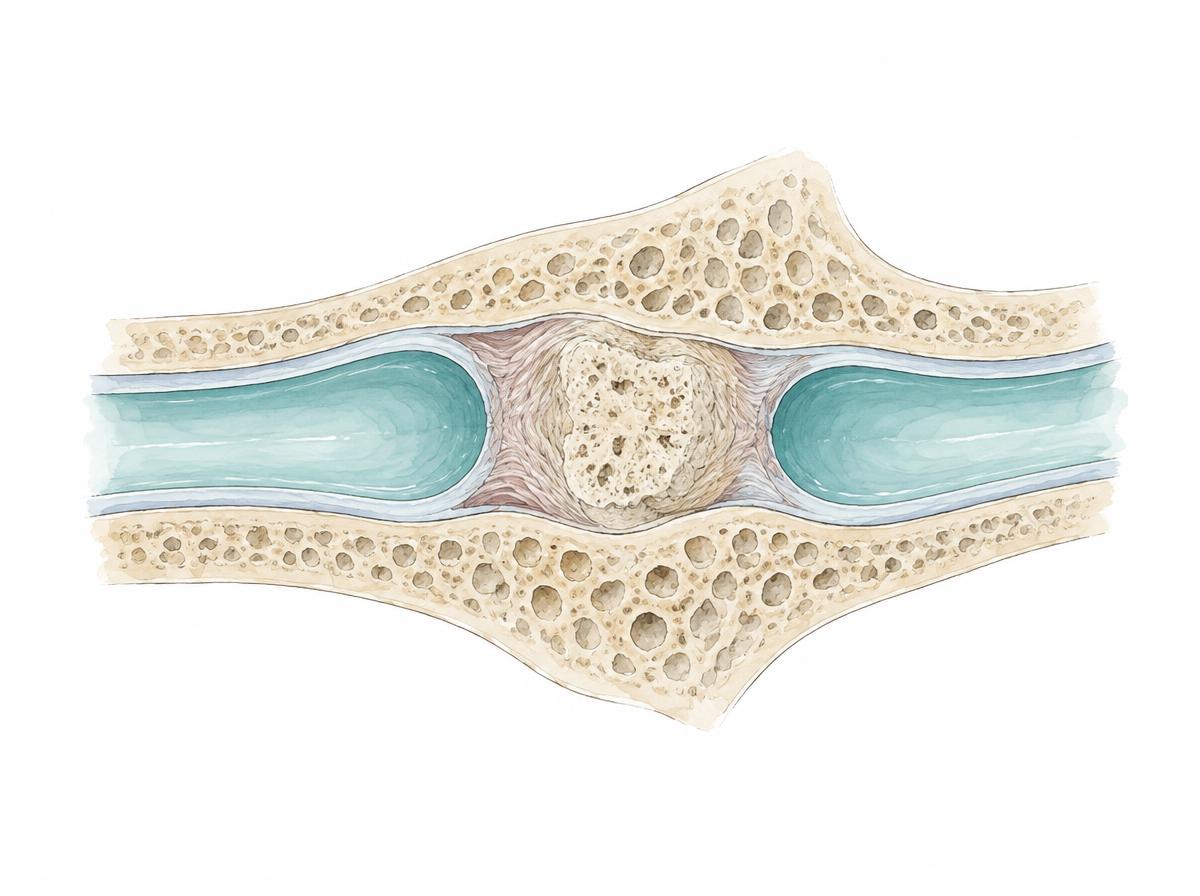
Repeated repositioning manoeuvres are the treatment of choice; only when these are insufficient over months is occlusion of the affected canal considered. In this operation the canal is exposed through a petrous bone approach and a short segment of the canal is closed with bone dust, connective tissue or fascia, so that the crystals can no longer set the endolymph in motion. In a series of 55 operated ears, all positional vertigo was eliminated; permanent hearing loss occurred in some patients, and temporary unsteadiness of gait is common. After the procedure come checks of hearing and balance; remaining unsteadiness is treated with balance training.