
Kopfzentrum Bielefeld
Epley maneuver for positional vertigo
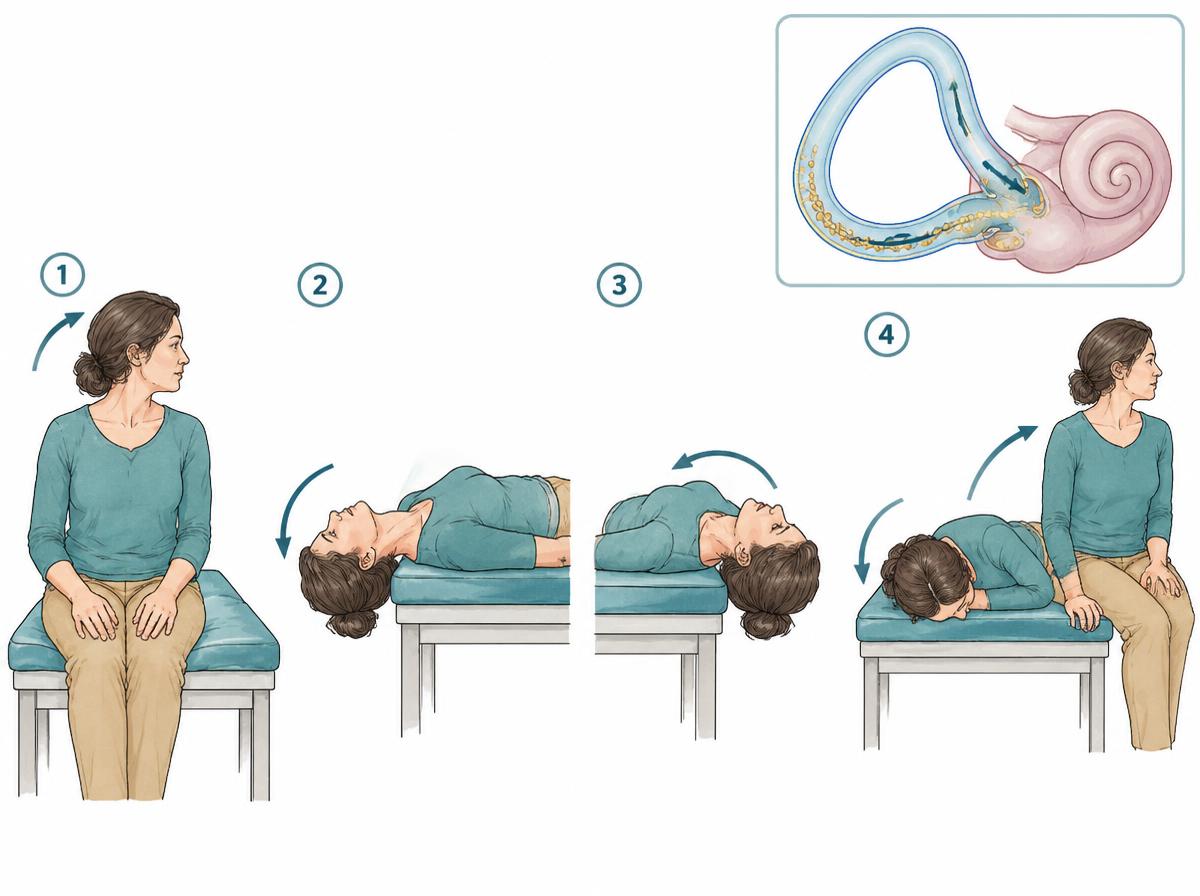
Positional vertigo (benign paroxysmal positional vertigo) is usually caused by small calcium crystals in the balance organ of the inner ear. The Epley maneuver is a defined sequence of head and body positions intended to move these crystals out of the semicircular canal.
When the maneuver is used
Typical features are brief episodes of spinning vertigo triggered by a change of position, for example when rolling over in bed, looking up or bending down. Before the maneuver it is assessed which ear and which semicircular canal are involved; the Dix-Hallpike positioning test is regarded as the standard examination. The Epley maneuver is used mainly when crystals are located in the posterior canal; other repositioning maneuvers are considered for other canals.
Procedure
The maneuver is performed with the patient lying on an examination table. The head is brought one after another into several defined positions and held for a while each time, until the typical involuntary eye movements and the vertigo reaction subside. The sequence of positions may be repeated several times. As a rule, no anaesthesia and no medication are required.
Symptoms, side effects and limitations
The movements can trigger nausea or vomiting, similar to an episode of vertigo. The maneuver is not suitable for some patients, for example if the cervical spine cannot be moved freely; this is clarified beforehand. Whether symptoms disappear completely after the maneuver cannot be predicted; sometimes repetitions or a different approach are needed.
Course and further steps
In about half of those affected, symptoms settle within one to three months even without treatment, so treatment is not always necessary. If positional vertigo is very distressing or persists, repositioning maneuvers can help. Slightly modified exercises exist for use at home, which can be done following medical instruction. If symptoms persist or new symptoms appear, the findings are reassessed. Sudden hearing loss, severe headache, double vision or disturbances of speech or sensation require immediate medical assessment.