
Kopfzentrum Bielefeld
Glomus tumour of the ear
Diagnosis
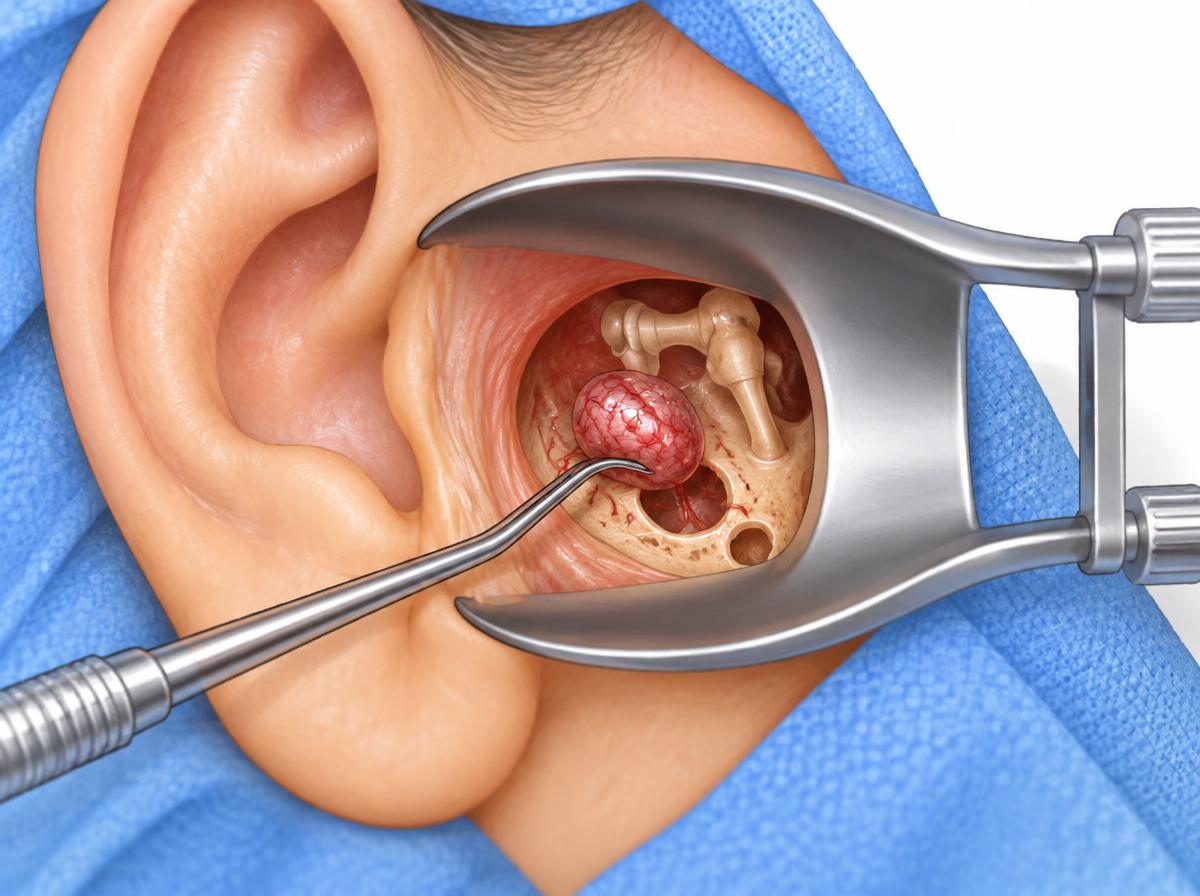
A glomus tumour (paraganglioma) of the ear is a benign, very vascular tumour arising from cells of the nerve plexus of the middle ear. It appears behind the eardrum as a reddish area pulsating with the pulse; under the ear microscope it can blanch when the eardrum is inflated with air. Computed tomography and magnetic resonance imaging show location and extent and separate it from larger mass lesions of the skull base.
Symptoms
The most common complaint is a noise in the ear synchronised with the pulse — a rushing sound in the rhythm of the heartbeat — followed by a slowly increasing hearing loss. Later, dizziness, a feeling of pressure in the ear, weakness of the facial muscles or nerve-related deficits at the skull base can occur.
Causes
The tumours arise from paraganglion cells that normally regulate body functions such as blood pressure and temperature; changes in the gene SDHD are described as a genetic cause. They usually occur later in life and grow slowly.
Treatment options
Because the tumours are hardly ever malignant and only rarely spread, small, barely symptomatic findings are sometimes first observed. The definitive treatment is microsurgical removal, usually through the ear canal or an approach behind the ear; larger mass lesions of the skull base require specialised procedures. Alternatively, radiotherapy can be considered for inoperable or residual findings.
After the procedure
After removal the wound usually heals quickly; hearing tests show whether hearing has been preserved or improved. Rare complications are an eardrum perforation or weakness of the facial nerve. Because recurrence is rare, regular follow-up examinations are recommended.