
Kopfzentrum Bielefeld
Nasal bone fractures
Diagnosis
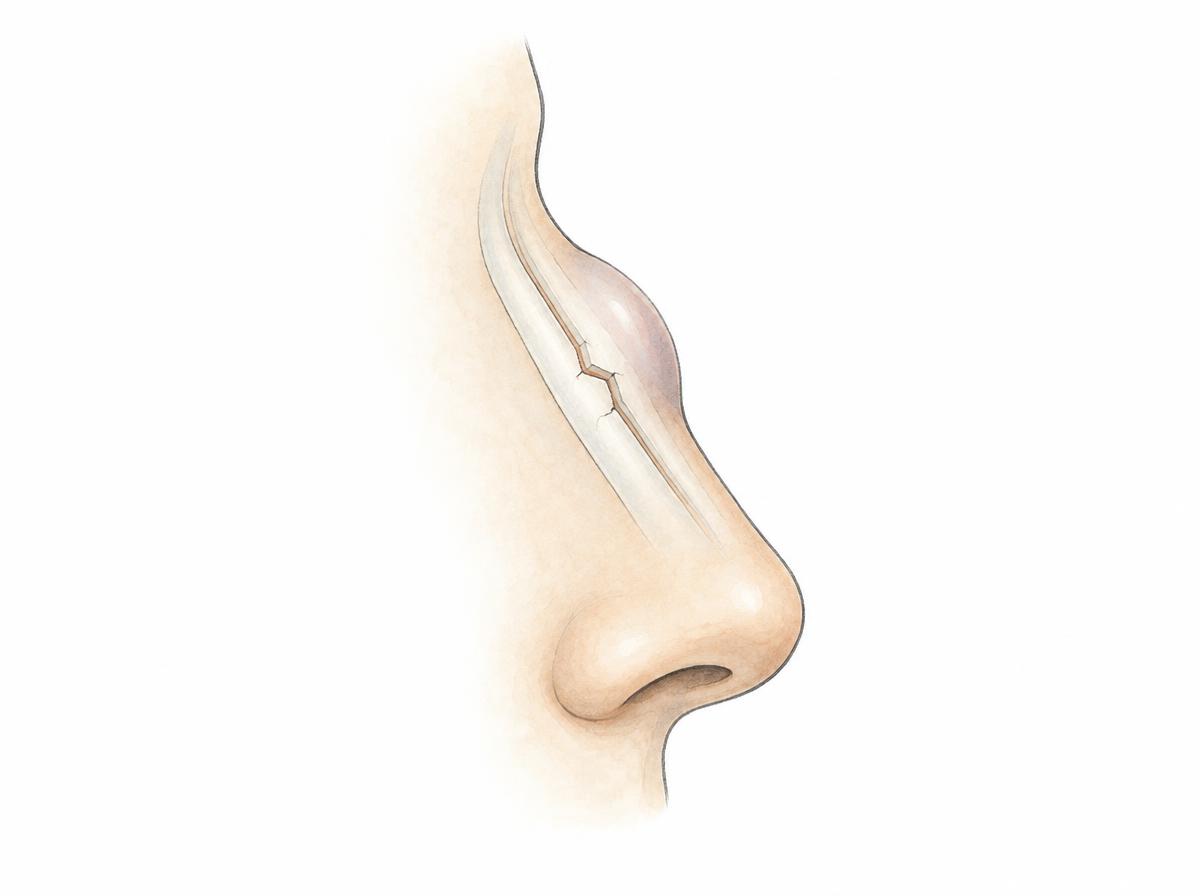
The nasal bone fracture is the most common facial skull fracture. After an injury the nose is assessed from outside and inside: the skin is checked for swelling, tenderness and deformity, and nasal speculum examination or nasal endoscopy assesses the mucosa, the nasal septum and any collection of blood between septum and mucosa. Nasal X-rays are rarely needed; computed tomography is added when further facial or skull base injuries are suspected.
Symptoms
Typical are pain, swelling and pressure over the bridge of the nose, bleeding from the nose in the first hours, a gritty sensation on touch and a visible deviation of the nose. Blue eyelids and blue rings around the eyes are common with this injury. If one-sided nasal obstruction persists or the nasal septum bulges, prompt medical assessment is needed; visual disturbance or double vision after a facial injury is a reason for immediate presentation at a hospital.
Causes
Most often nasal bone fractures follow a direct blow or impact to the nose, for example in sport, through a fall, in a fight or in traffic. Because the nasal bone is thin and projects compared with the other facial bones, it breaks even with little force. In children it is checked whether the growth of the nasal framework is affected; a persistent one-sided obstruction of nasal breathing after the fracture can indicate an injury of the nasal septum.
Treatment options
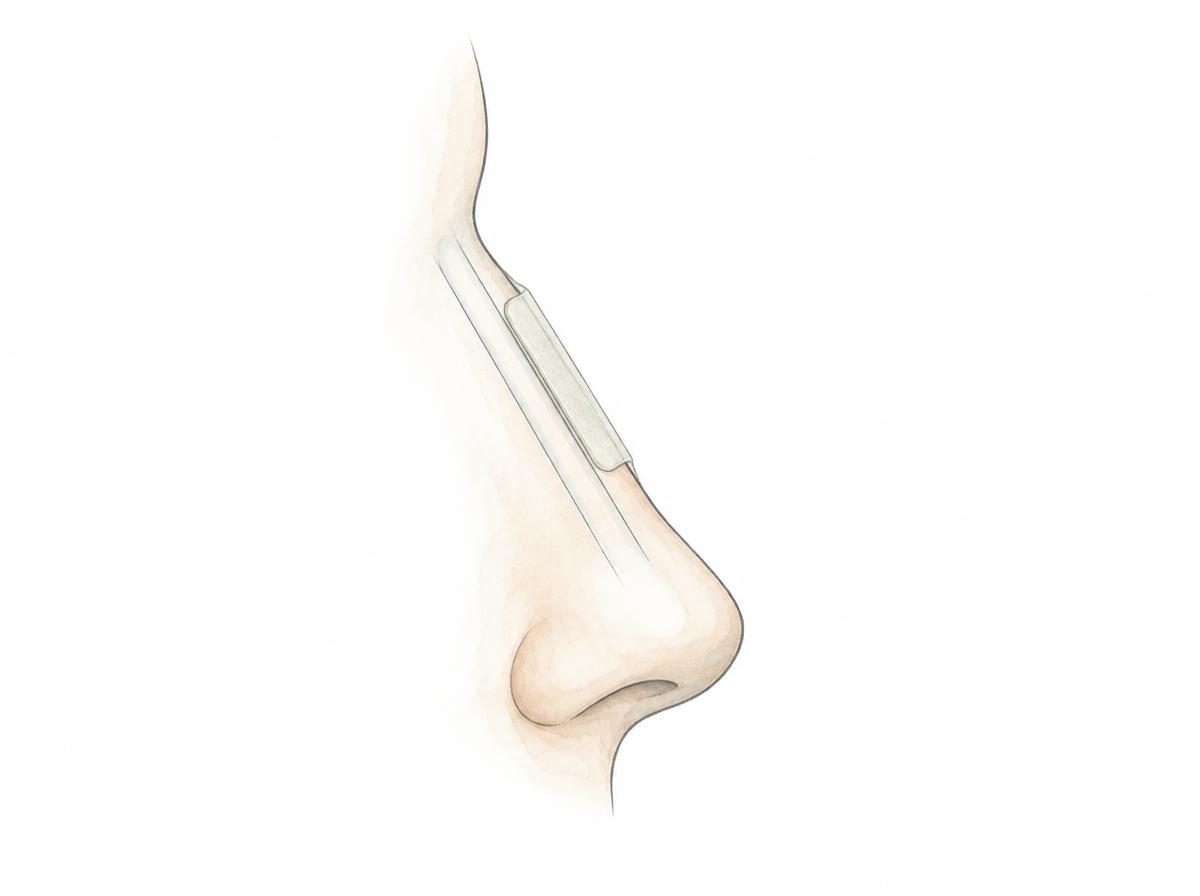
In the first hours, cooling, stopping the bleeding and an elevated trunk position come first; a collection of blood in the nasal septum is relieved promptly so that the cartilage layer is not damaged. If the nasal bone is displaced, it is usually brought back into straight position as a closed manoeuvre, under local anaesthesia or general anaesthesia, depending on age and extent. Reduction is usually waited for until the swelling subsides, generally a few days, shorter in children than in adults. The straight position is then held for some days by an external splint and by small internal splints over the septum; during this time the nose must not be knocked and must not be blown forcefully.
If a deformity or obstructed nasal breathing remains, the procedure can be repeated at a later date or supplemented by a nose correction. After a nasal bone fracture it is checked whether the nasal septum stands straight and whether both sides of the nose are freely patent; bilateral headache, persistent crusts or repeated infections are reasons for renewed assessment.