
Kopfzentrum Bielefeld
Nosebleed
Diagnosis
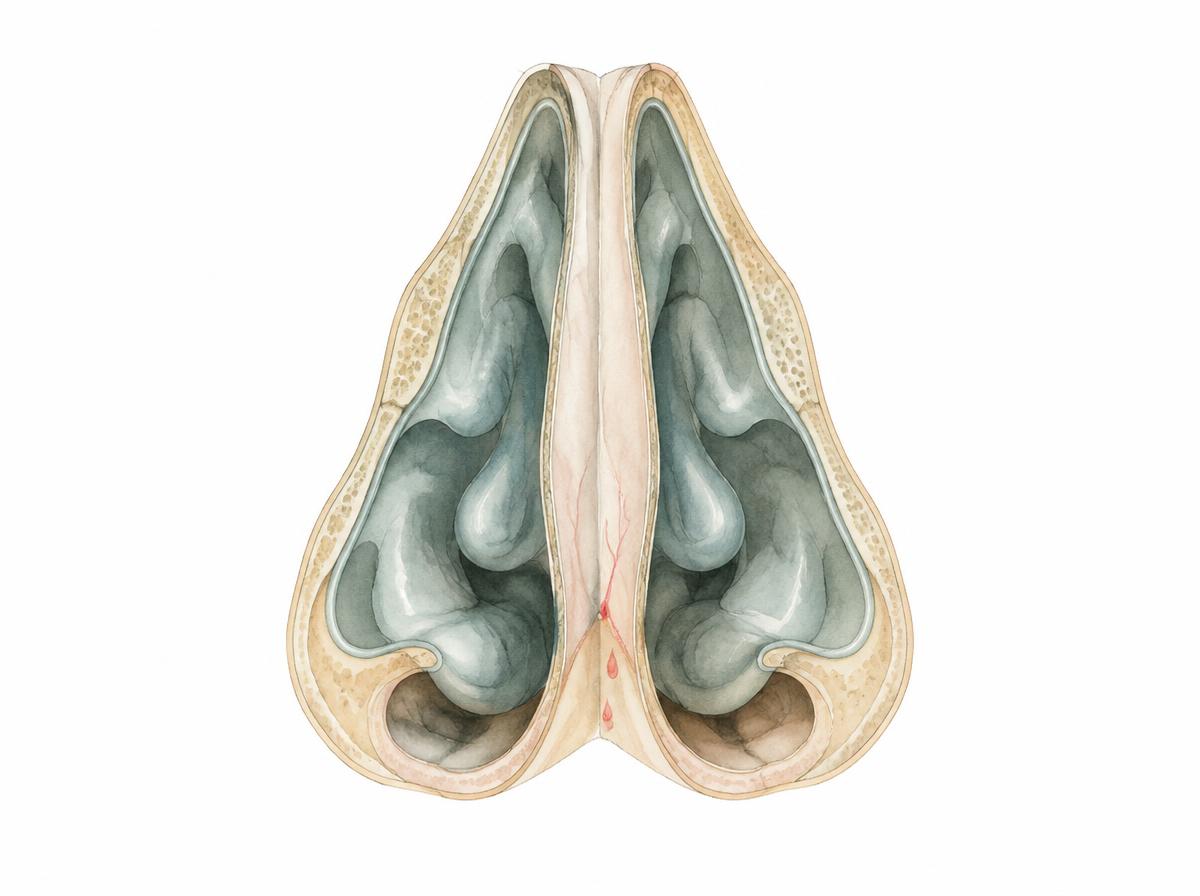
Nosebleeding (epistaxis) is one of the most common emergencies in ENT practice. Most often the bleeding comes from the front of the nasal septum, where several fine vessels run very close to the surface. After the bleeding has been stopped, the nose is assessed endoscopically to locate the source; a blood test can reveal a clotting disorder and blood pressure measurement a contributing factor.
Symptoms
Typical is bright blood coming forward from one nostril, often after blowing, rubbing, or with a dry mucosa. If the blood mainly runs down the throat, if it appears on both sides, or if it continues for more than about half an hour despite firm pressure, a posterior and more severe bleed may be present. Dizziness, pallor and nausea during heavy bleeding are reasons to go to hospital immediately.
Causes
Most often nosebleeds follow irritation or injury of the mucosa: nose picking, forceful blowing, dry heated air, colds, allergic inflammation, or long-term use of nasal sprays. Persistently raised blood pressure, medicines that inhibit clotting, inherited clotting disorders and vessel changes are predisposing. With one-sided foul-smelling discharge, a foreign body is also considered.
Treatment options
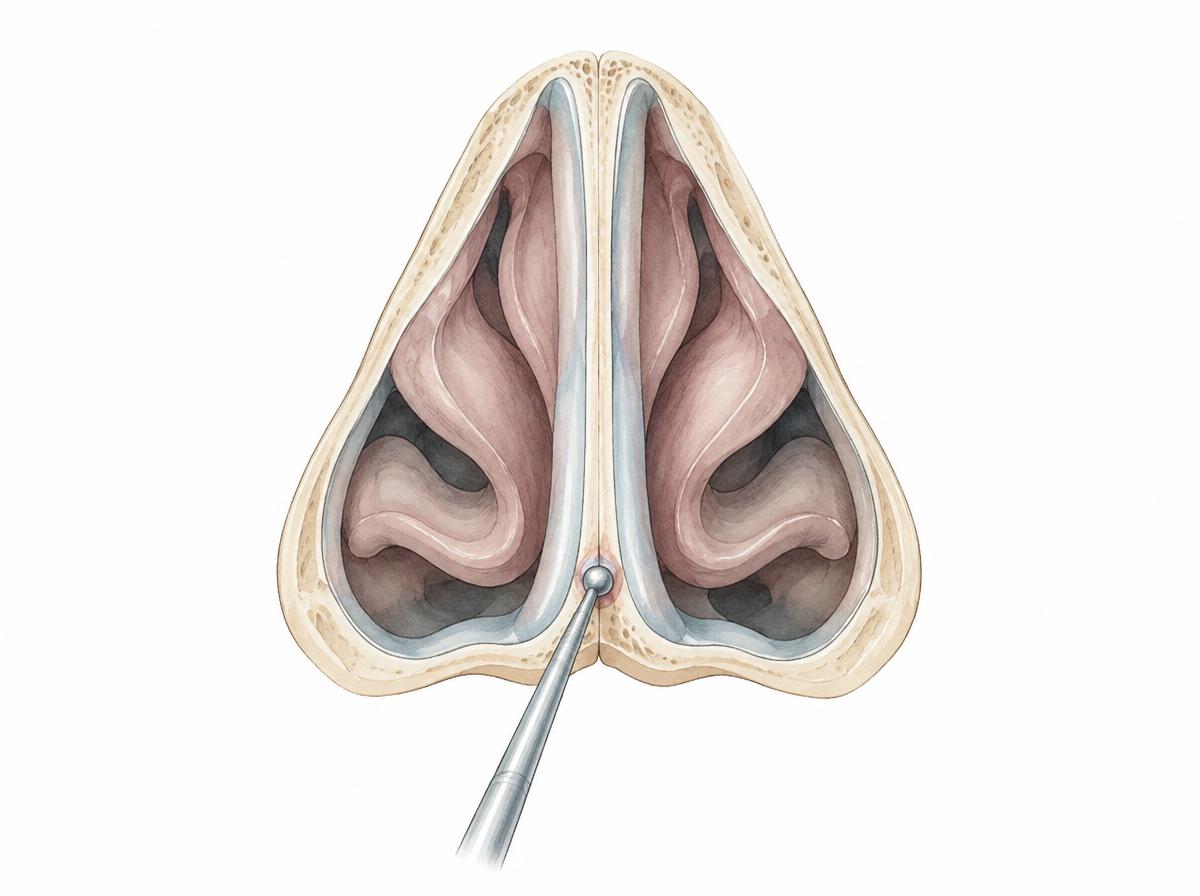
First comes simple help: sit upright, hold the head slightly forward, and calmly pinch the lower two thirds of the nose for at least ten minutes. If the source is found in the front of the nose, it is usually cauterised – with electric current (electrocautery) or chemically with a cautery agent, each time after local anaesthesia and after removing the blood clot. If this is not enough, pledgets, nasal balloons or posterior packing may be considered; for recurrent bleeding a vessel can be closed surgically.
After cautery comes a period of care: do not pick the nose, do not blow forcefully, keep the mucosa moist, and continue clotting-inhibiting medicines only after discussion. Because the freshly sealed site can bleed again in the first days, it is checked; with repeated episodes, clotting, blood pressure and the nasal conditions are assessed again.