
Kopfzentrum Bielefeld
Tympanoplasty with TORP and PORP for conductive hearing loss
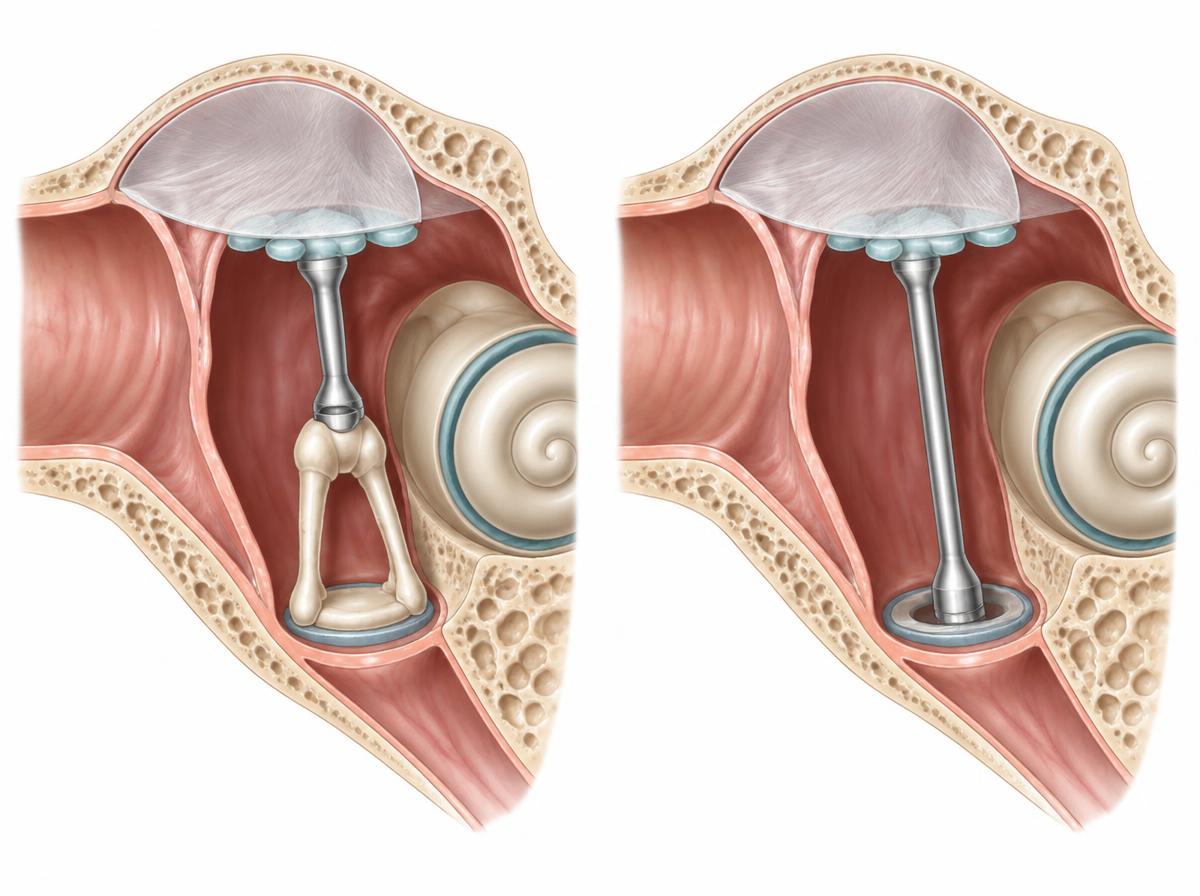
In conductive hearing loss, sound is not adequately transmitted through the outer or middle ear to the inner ear. If the chain of auditory ossicles is damaged or disrupted, reconstruction with an ossicular prosthesis (ossiculoplasty) may be considered as part of tympanoplasty. Whether surgery is suitable depends on the cause, hearing assessment findings and the condition of the middle ear.
PORP: partial replacement of the ossicular chain
A PORP (Partial Ossicular Replacement Prosthesis) bridges part of the ossicular chain. It is typically used when the stapes superstructure is preserved and mobile. The prosthesis connects the eardrum or remaining ossicles to the head of the stapes.
TORP: total replacement
A TORP (Total Ossicular Replacement Prosthesis) bridges the ossicular chain down to the stapes footplate when the stapes superstructure is absent. A mobile footplate is a prerequisite for this typical reconstruction. The choice of prosthesis, size and fixation depends on the anatomy found during surgery.
Aim, risks and limitations
The aim of reconstruction is to improve sound transmission. A specific hearing improvement cannot be guaranteed. The condition of the eardrum, middle ear ventilation, inflammation, scarring and previous operations influence the outcome; hearing loss may persist even after surgery.
The prosthesis may become displaced or extrude through the eardrum. Scarring or recurrent middle ear disease may worsen the outcome and make further surgery necessary. Individual surgical risks and alternatives, including possible hearing aid use, are discussed before the procedure. This information does not replace a personal medical consultation.
Follow-up care
After tympanoplasty, wound healing, the eardrum and hearing are checked. The treating team provides advice on ear protection, water exposure, physical exertion and pressure equalization according to the specific procedure and the course of healing.